Photo report
Ask for damage and repair, photographed
A ceiling stain rarely sits under the hole that caused it. Roof leak detection and repair in Des Moines, IA starts with tracing water to its real entry point, using a moisture meter, an infrared camera, and an attic-side look. Then the flashing, boot, or shingles that failed are repaired. Ask for the repair water-tested where possible.
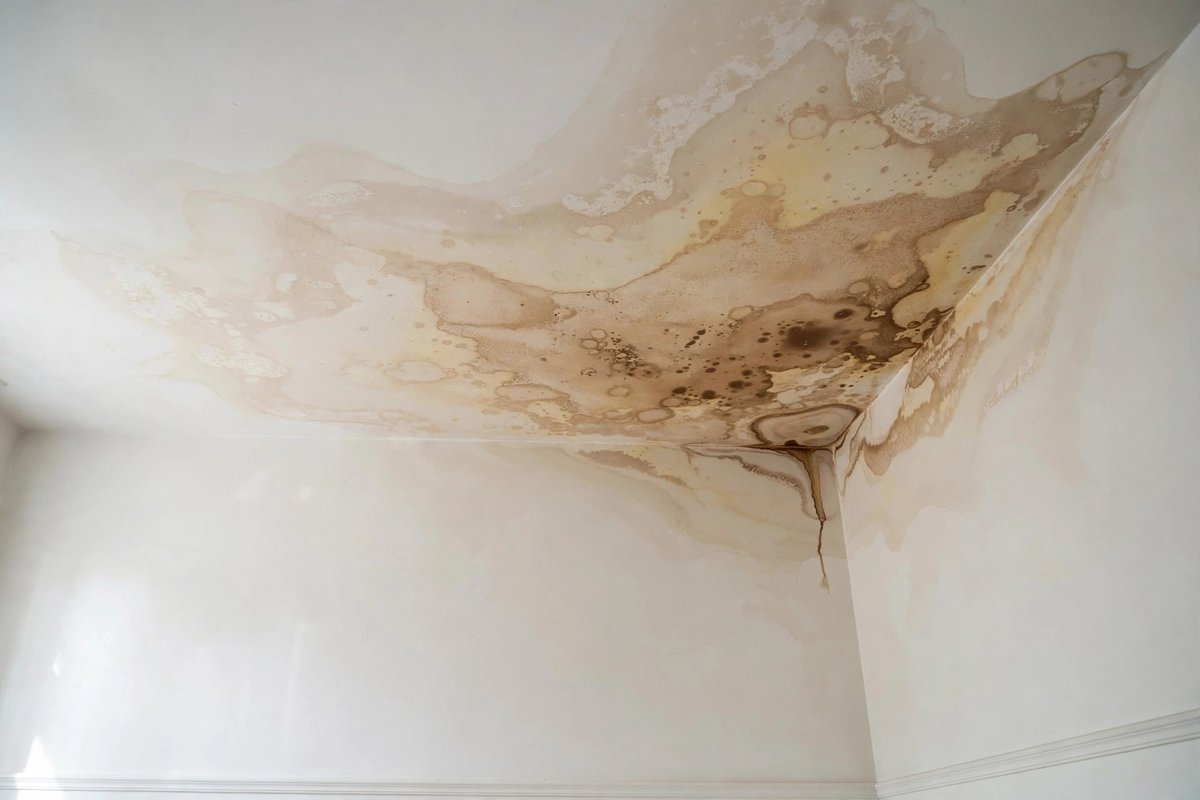
Finding a leak and fixing it are two different jobs. Here is what a leak visit covers, from the first look to the water test.
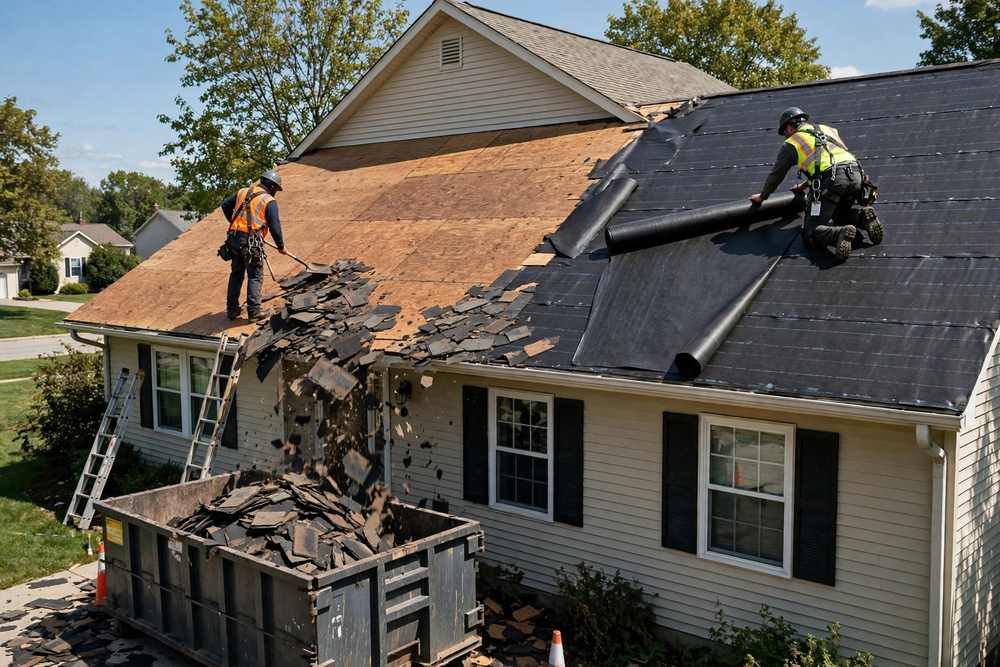
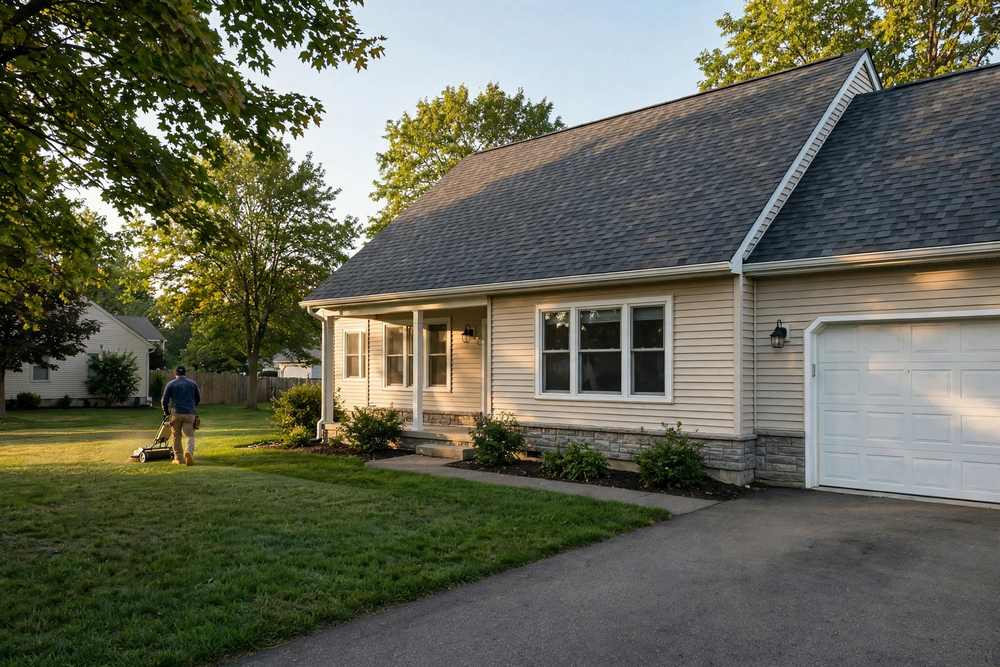
Leak tracing covers Des Moines homes of every age, from steep Victorians to low-slope ranches. The stain tells where to start looking, not where the hole is.
Two-story homes and multi-unit houses hide leaks across more roof area and more penetrations. Each one is typically traced the same way: attic first, then roof, then water test.
Roof leak detection and repair in Des Moines, IA is the work of finding where water enters a roof and correcting that failure. Water rarely drops straight down: it enters at a failed flashing or boot, travels along the deck, and shows up as a stain feet away. It is traced with a moisture meter and infrared camera, the attic side is checked, and then the failed component is repaired. Chimney flashing is the roofer's work; the chimney crown and brickwork belong to a mason.
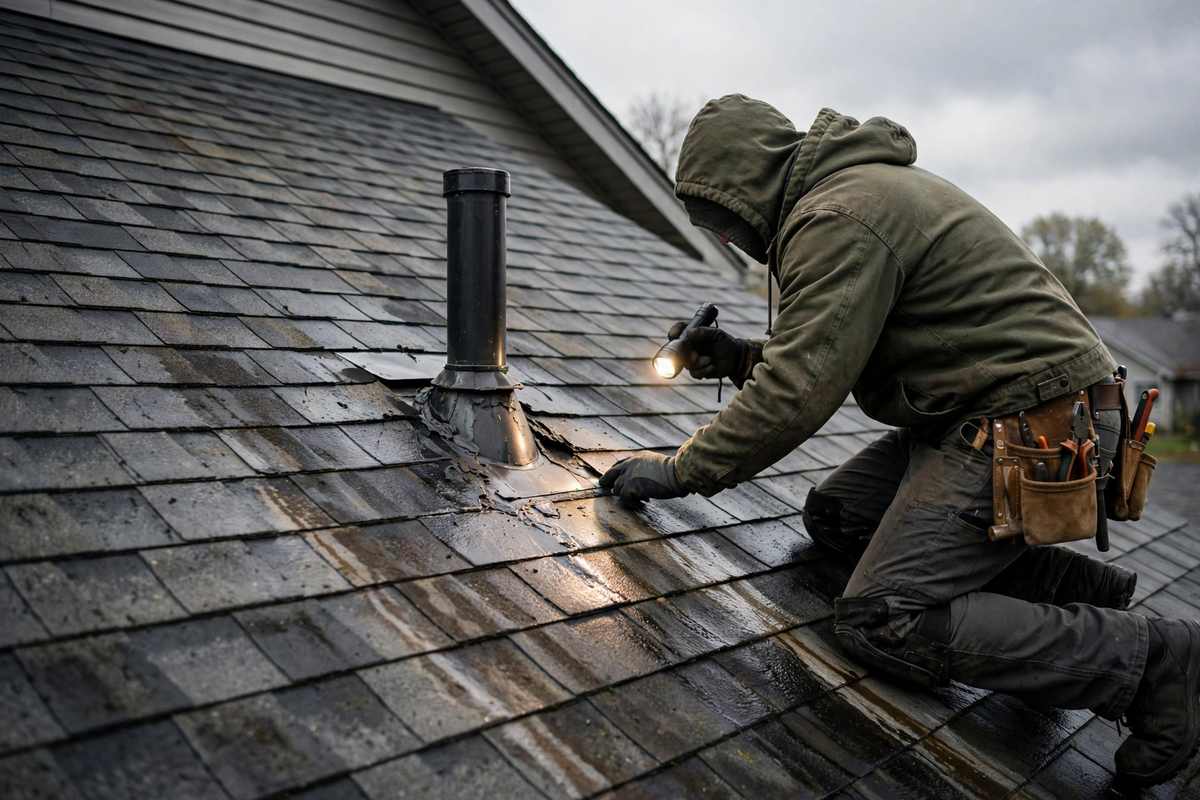
The usual entry points in Des Moines are pipe boots, chimney and wall flashing, valleys, and skylight flashing, plus ice dam backup in winter. Older homes in Sherman Hill and Beaverdale may have layered shingles that hide the path water takes. A roof inspection catches many of these failures before they reach the ceiling, and a roof repair addresses the ones it finds.
The stain shows where water arrived. The job is finding where it got in.
Here is the typical sequence for a leak call, from the first description to the tested repair.
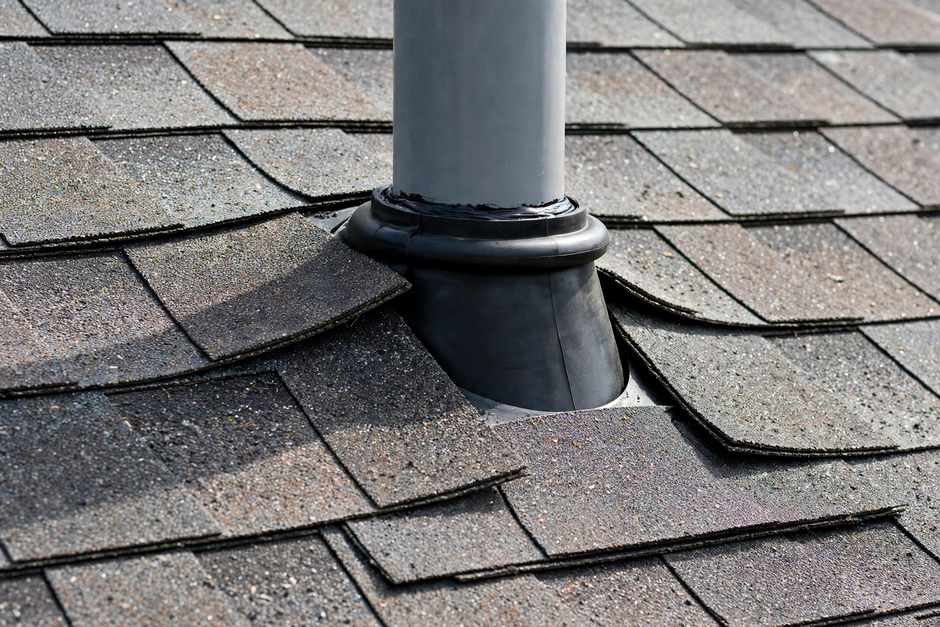
You describe what you are seeing: where the stain is, when it appeared, and whether it grows with rain or with thaw. Ask to confirm a time, the address, and the roof type if known.
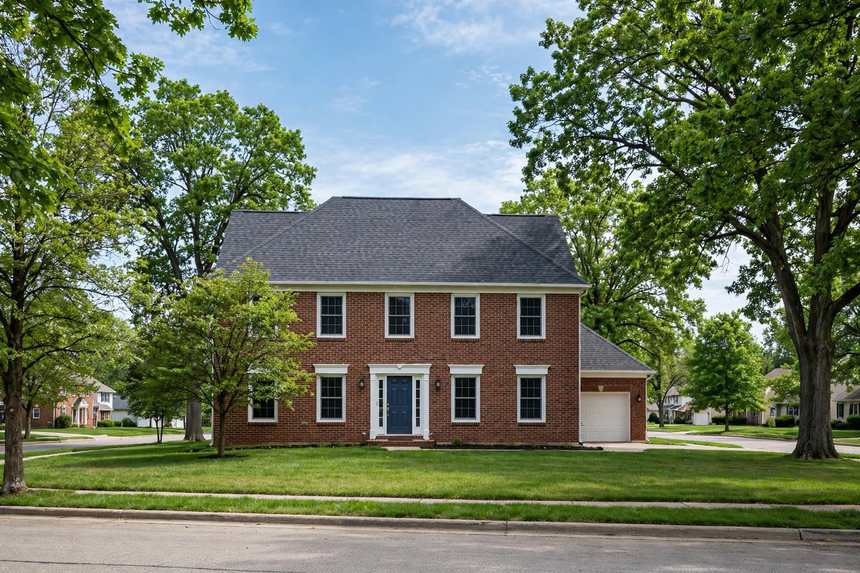
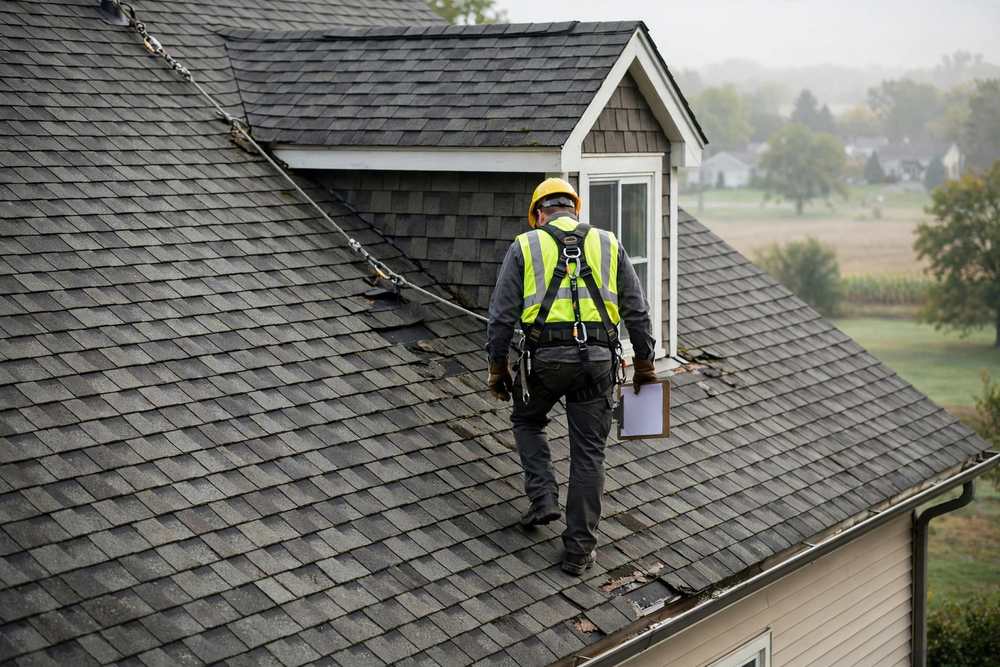
Ask for the roof walked, with field shingles, valleys, flashing, pipe boots, and the chimney checked. Ask for soft spots probed and the attic side checked for stains and damp insulation.

A moisture meter reads the deck and an infrared camera shows wet zones behind drywall and under shingles. Together they narrow the entry point before anything is opened up.
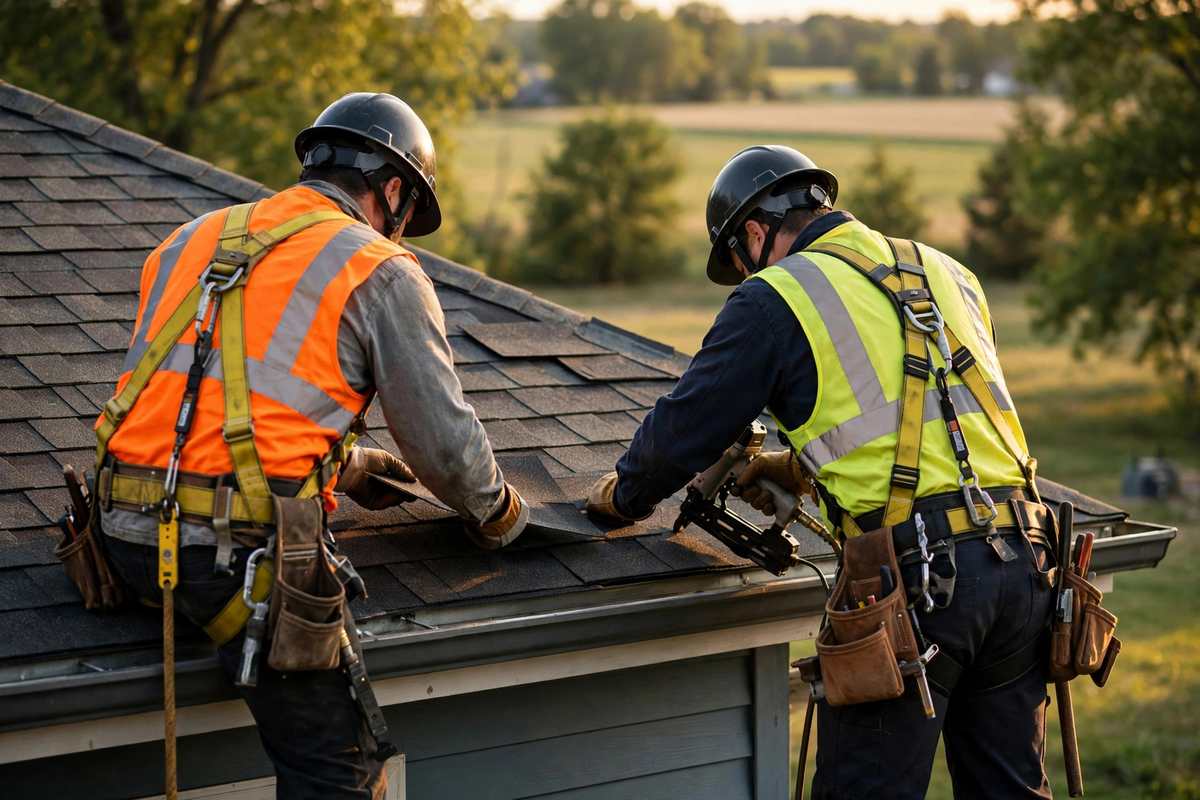
The failed flashing, boot, or shingles are replaced and the penetration is sealed to the system specification. Only the failed area is opened, and the repair is matched to the existing courses.

Ask for the repair water-tested where possible, the attic side checked again, and what was found and fixed walked through. Ask for photos of the damage and the finished repair.
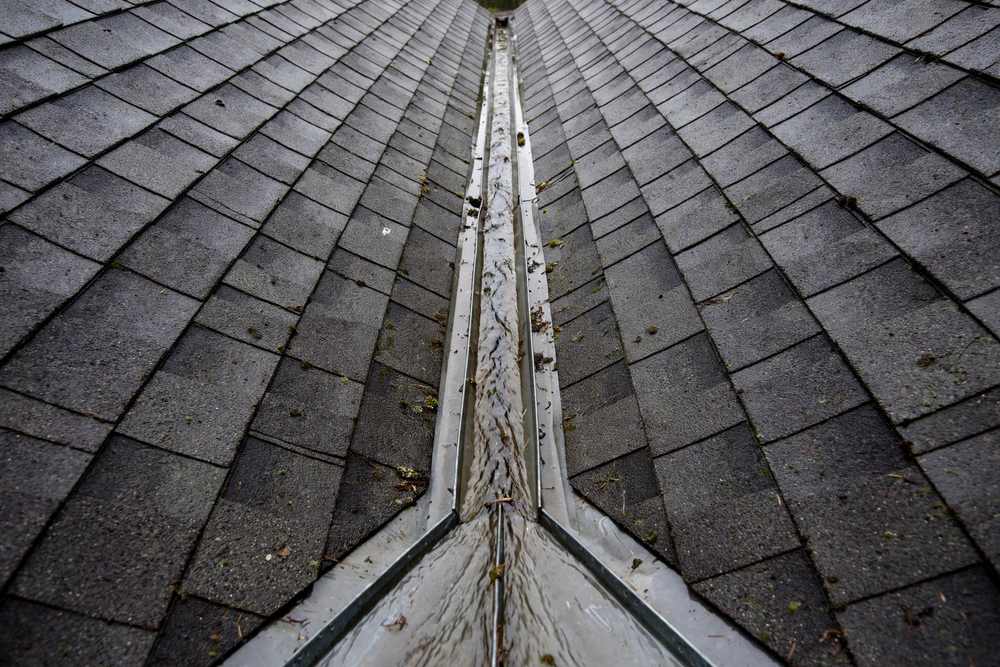
Shows temperature differences that reveal wet zones behind drywall and under shingles, which is how slow leaks get found.

Reads the moisture content of the deck, confirming where water is actually present instead of guessing from the stain.
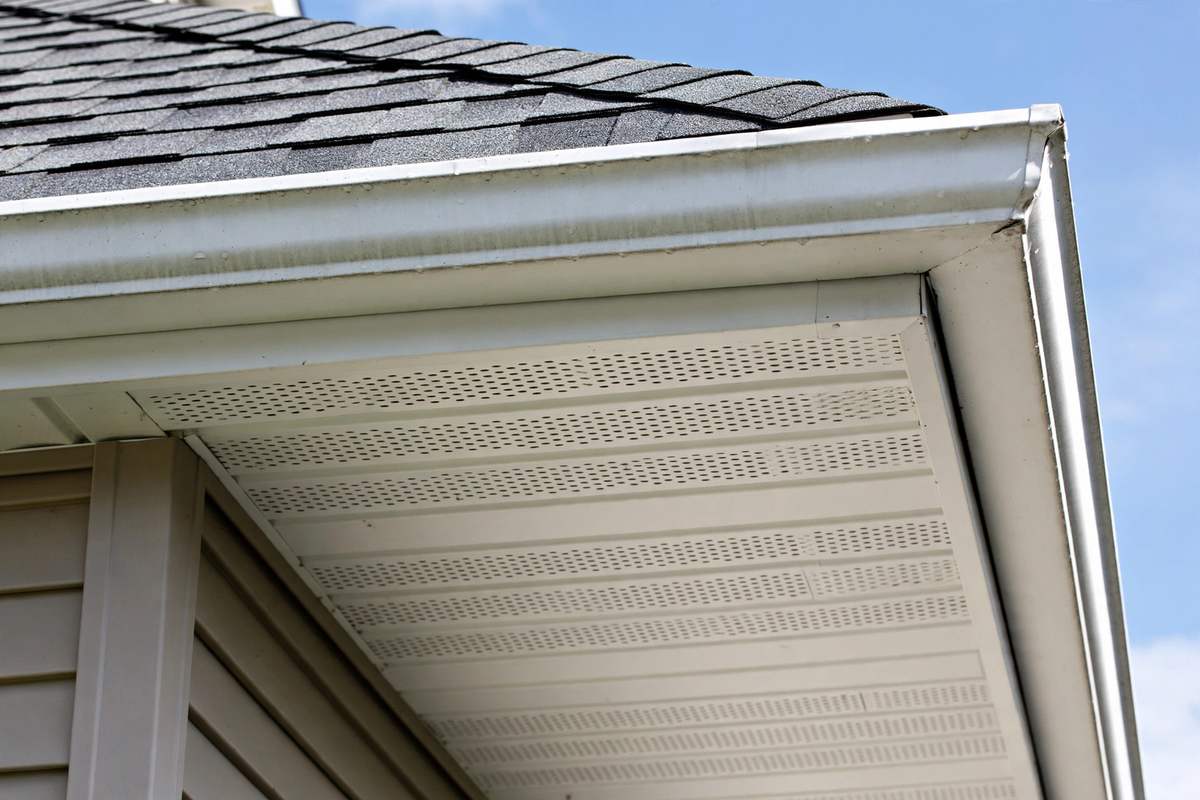
Safe access to steep pitches and two-story roofs, so the inspection is thorough instead of rushed.
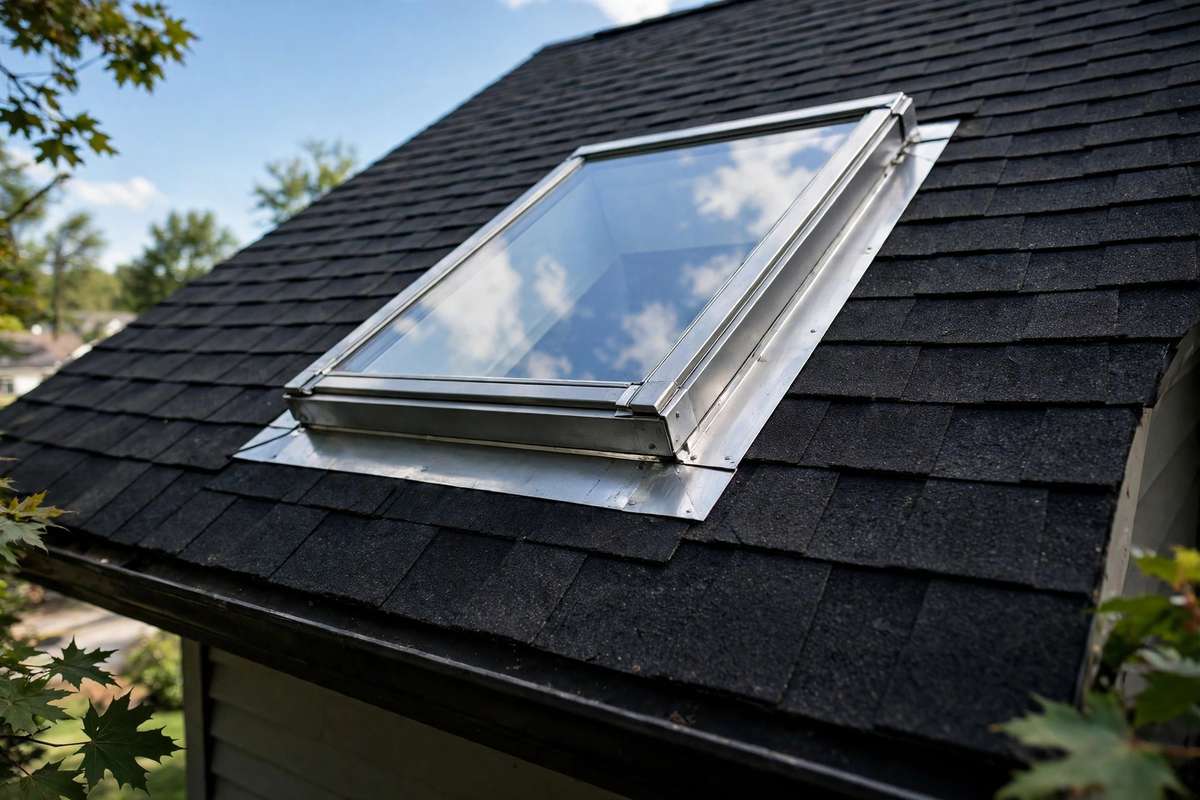
Opens failed flashing and shingles cleanly so the repair area shows the true condition of the deck.
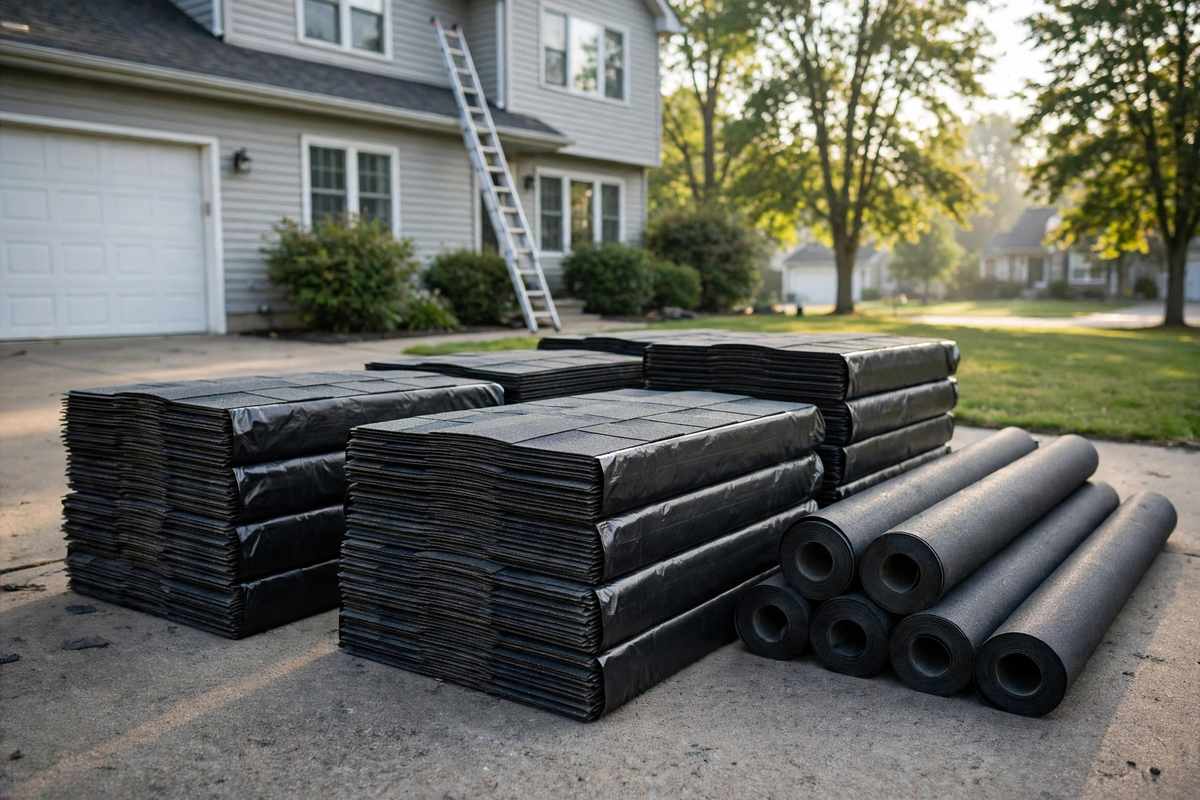
Marks straight courses and cuts flashing to fit chimneys, valleys, and skylights.
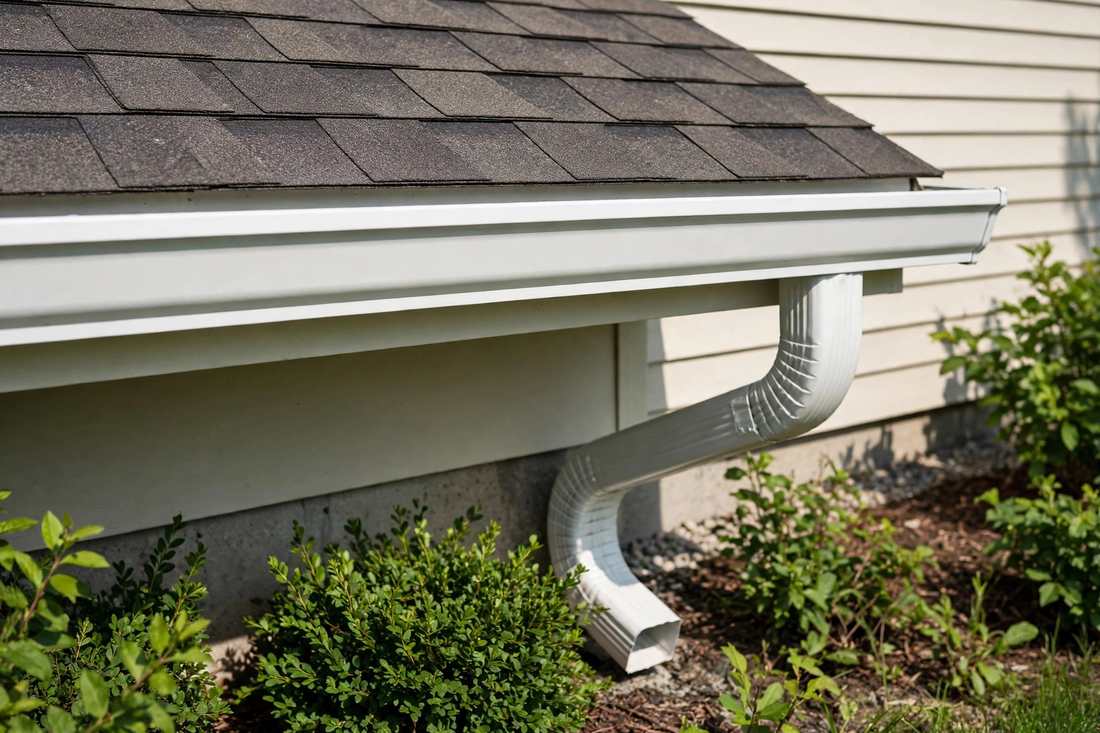
Cuts replacements to fit and sets them to the system pattern, so the repair blends into the existing course.
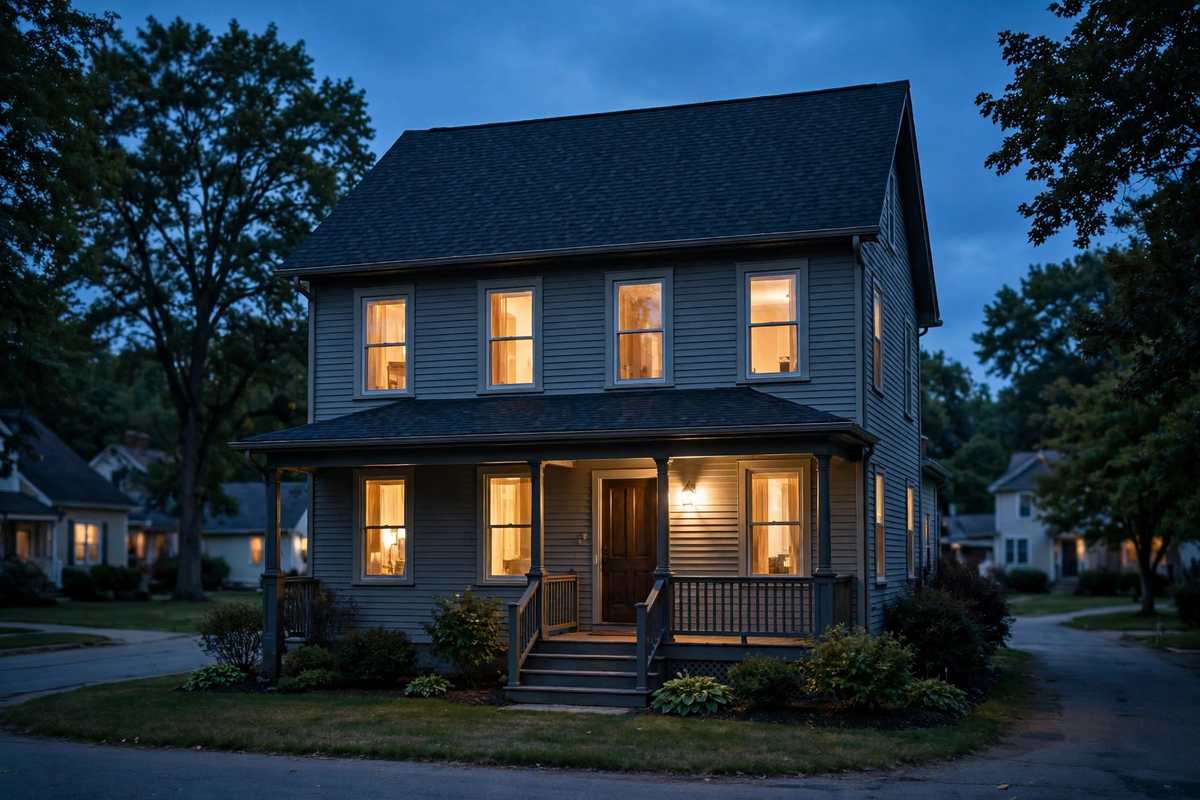
Water is run over the repaired area in a controlled way to confirm the entry point is sealed.
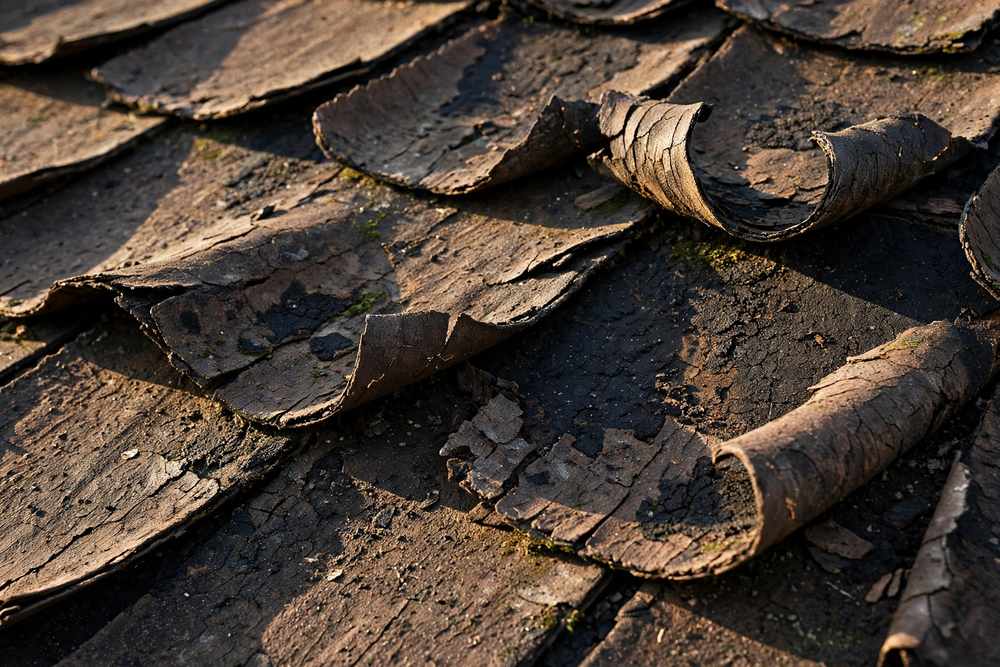
Stains, damp insulation, and daylight on the attic side often pinpoint the entry more directly than the roof surface does.
A stain that grows after heavy rain means water is getting in somewhere uphill. Tracing with a moisture meter usually finds a failed pipe boot or lifted flashing, then the failed component is repaired and water-tested.
Active dripping needs the entry point found, not just a bucket. The roof and attic are inspected, the water path is traced, and the failed flashing, boot, or shingles are repaired. The attic side gets checked for remaining moisture.
Buyers and sellers both need to know whether a flagged stain is an active leak or an old one. Ask for an inspection, tracing, and photos, and a written summary of what was found.
A low-slope porch or garage roof that leaks at a seam needs membrane work, not shingles. The seam and flashing are inspected, the failed section is repaired with matching membrane, and drainage is checked.
Des Moines leaks follow the seasons: wind-driven rain in spring, hail damage in summer, and ice dam backup in winter. Older housing stock adds layered shingles and aging flashing that hide the path water takes.
A ceiling stain keeps returning after patching. The stain sits several feet from the chimney, and two previous patches addressed the drywall, not the roof.
A typical scope traces the water path to failed chimney flashing, rebuilds the step and counter flashing, and replaces the shingles around it. The attic side is checked for remaining moisture.
Chimney flashing is worth a look each spring, since freeze-thaw cycles work it loose over time.
A bedroom ceiling drips during heavy rain. The roof above looks sound from the ground, and the stain sits downhill from a vent pipe.
A typical scope finds a cracked pipe boot with a moisture meter, replaces the boot and surrounding shingles, and water-tests the repair. The boot, not the stain, was the failure.
Pipe boots age with sun exposure. A roof check after hail season catches cracked boots before they leak.
A porch ceiling stains after every rain. The low-slope roof above is patched near a seam, and the wall tie-in flashing is lifting.
A typical scope repairs the failed seam with matching membrane and rebuilds the wall flashing. Drainage is checked so water leaves the low slope.
Seams and drains on low-slope roofs deserve a yearly look, since small seam failures grow with every rain.
Leaks rarely announce their source. Here are the patterns traced most often in Des Moines homes.
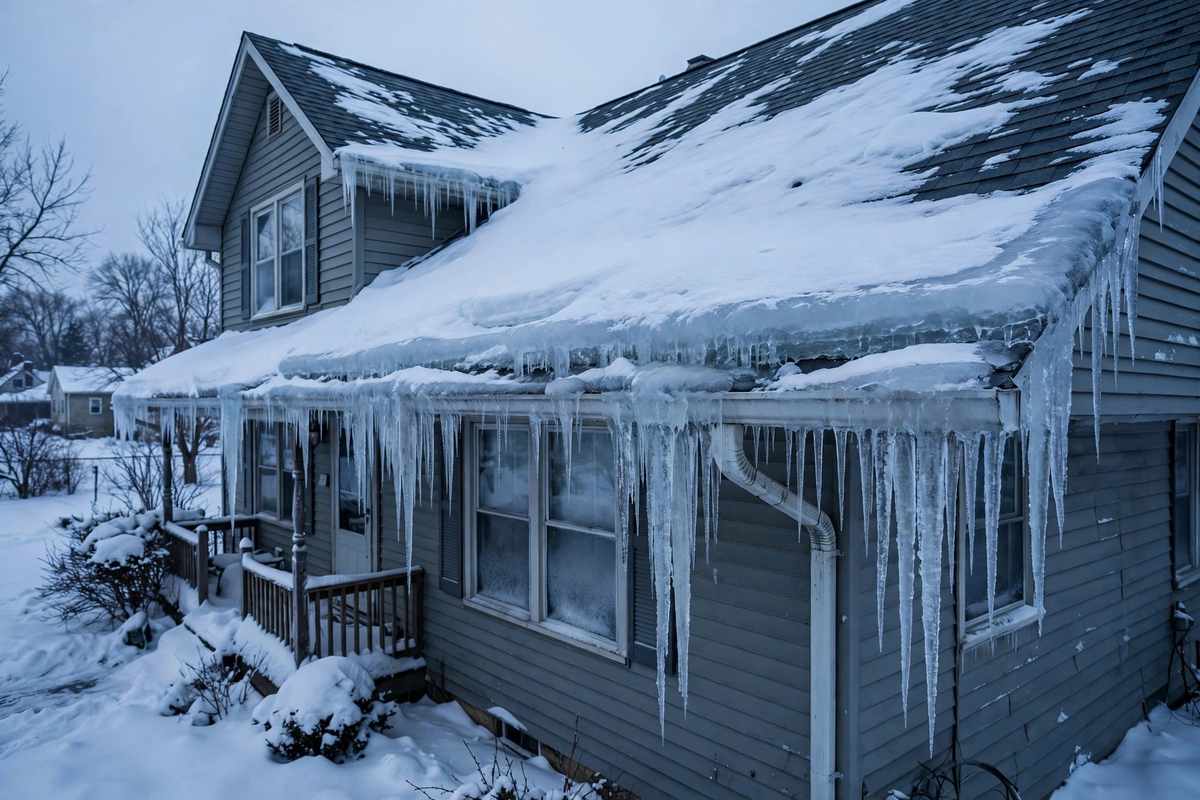
The stain is traced uphill with a moisture meter and infrared camera to the entry point, then the failed flashing, boot, or shingle is repaired. Patching the stain alone leaves the water running.
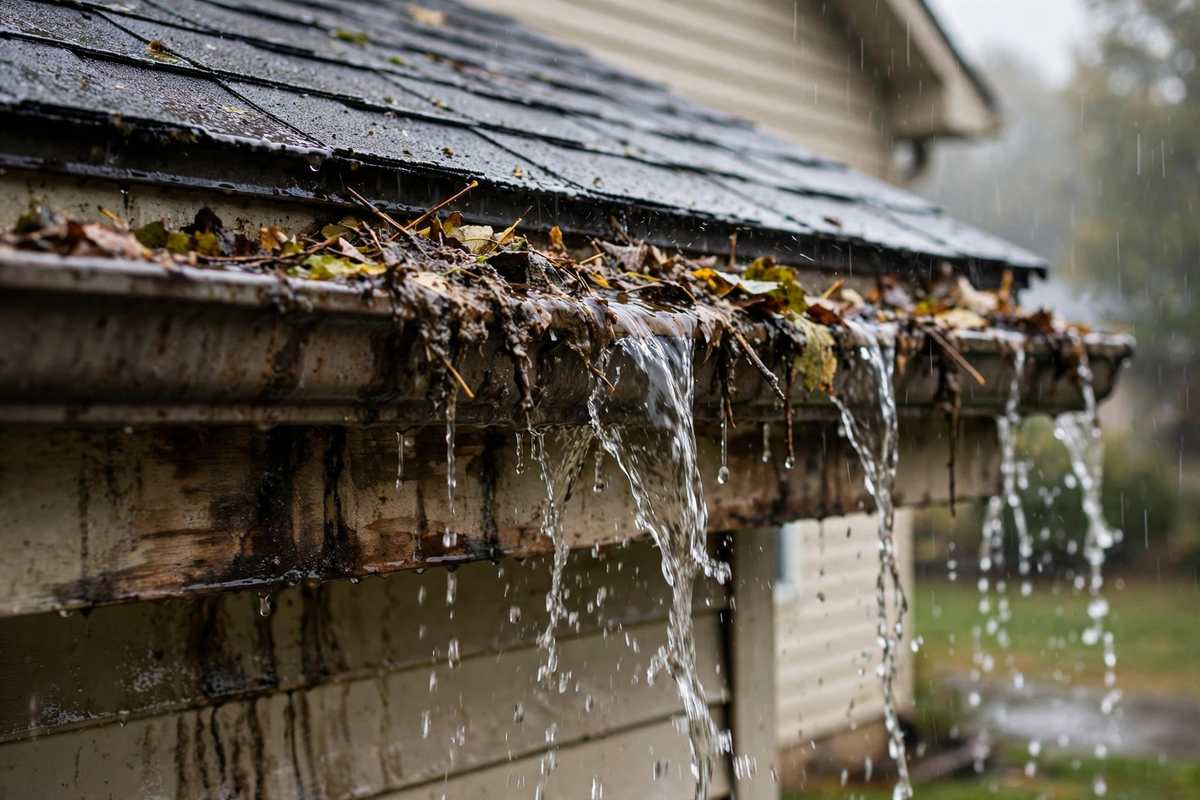
Freeze-thaw cycles work flashing loose at chimneys and skylights. The flashing is rebuilt with proper step and counter flashing and water-tested. The crown and brickwork of a chimney belong to a mason.

Ice at the eave forces meltwater under the shingles and into the attic. The damage is repaired and the cause is addressed: attic ventilation and eave flashing, so the cycle stops.
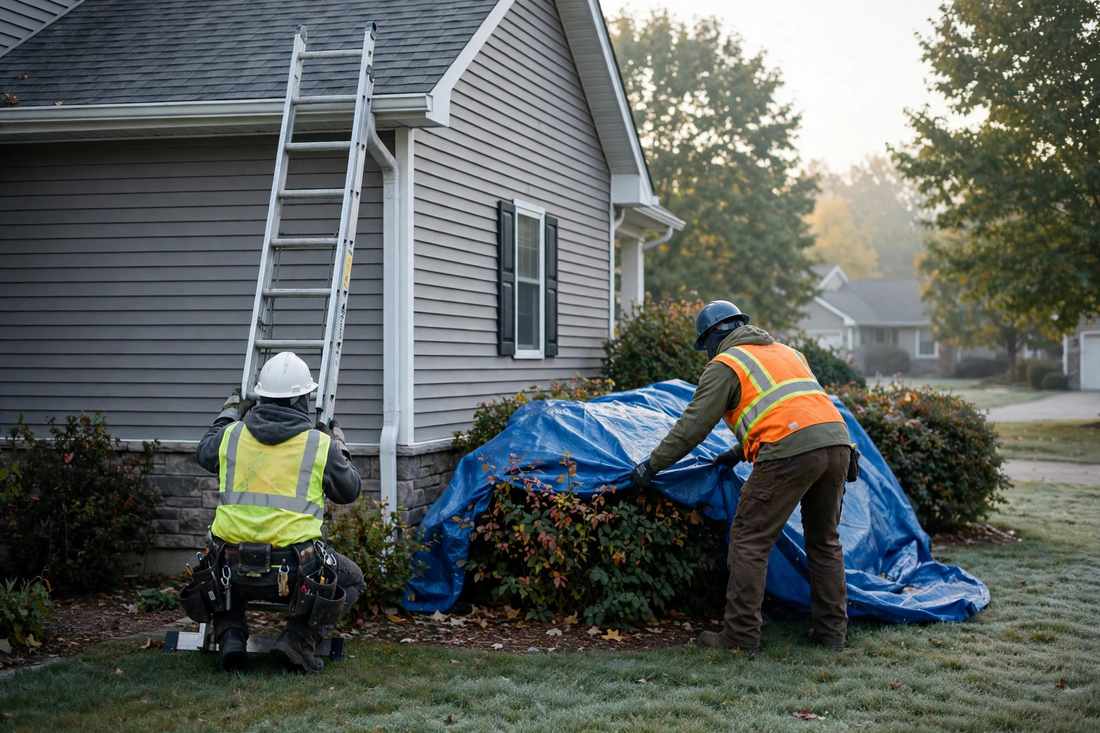
Hail bruising and lifted shingles may not leak until the next heavy rain. An inspection after storms documents bruising with photos, and the affected courses are repaired before the next rain finds them.
A moisture meter and infrared camera show where water actually is, so the repair addresses the entry point instead of the stain. That is what keeps a leak fixed.
When the roof around a leak is sound, a targeted repair is the honest scope. The inspection should say so plainly either way.
Ask for photos of the damage and the finished repair, plus a written summary. That record can be shared with your insurer when storm damage is involved.
Many leaks show first on the attic side: stains, damp insulation, daylight. The attic is checked as part of a leak call, because the roof surface alone does not tell the whole story.
Records worth asking for, to keep and share.
Ask for damage and repair, photographed
Ask whether the repair is water-tested and confirmed sealed where possible
Ask for what failed and what was fixed, in writing
Water follows the path of least resistance, which is rarely a straight line down. Understanding that saves a lot of patched drywall.
Water enters at a failure, travels along the deck, and shows up feet away. The stain marks the arrival, not the entry.
Warm, moist air in a poorly vented attic can condense on cold decking and drip like a leak. An inspection tells condensation from a roof failure, and the fixes differ.
Ice at the eave dams meltwater, which backs up under the shingles. Ventilation and ice barrier address the cause; patching the ceiling does not.
Questions about an address in Des Moines? Call (515) 385-2566 and ask.
The price depends on how hard the leak is to trace and what the repair involves once the source is found. Some leaks show themselves on a visual inspection, and others need moisture readings and attic checks. Ask for an inspection and a written scope with the price before repair work starts.
Start inside: note where the stain is, then look uphill from it, since water travels along the deck. Check pipe boots, chimney flashing, valleys, and lifted shingles. A moisture meter and infrared camera find wet zones that eyes cannot. If you cannot safely inspect the roof, call (515) 385-2566 and ask for it traced.
Usually a failed flashing, pipe boot, or shingle uphill from the drip. Water enters at the failure, travels along the deck, and shows up feet away. Ice dams can do the same in winter, and condensation in a poorly vented attic can mimic a leak. An inspection tells which one it is.
Often, yes. When the leak comes from one failed flashing, boot, or section of shingles and the roof around it is sound, a targeted repair is the right scope. Chimney flashing is the roofer's work; the chimney crown and brickwork belong to a mason.
Call ZT Contracting LLC at (515) 385-2566 to arrange a leak visit, and ask for the water traced to its source, photos of what is found, and a written scope before repair work.
Call (515) 385-2566, Monday through Saturday, 8 AM to 6 PM, to arrange a time to look at your roof. We are closed on Sundays.