Written scope
Ask for what failed, what is replaced, and the price
When water is coming through your ceiling, roof repair in Des Moines, IA starts with finding the actual source instead of guessing. Missing shingles, flashing failures, hail damage, and ice dam leaks on Des Moines homes are all repair work. Whether it is a repair after a storm or a slow leak that has been staining drywall for months, the fix starts with a diagnosis, a price, and the repair itself.
Every repair is different, but a standard job covers the diagnosis, the materials, and the cleanup. Here is what is included in a typical repair and what is priced separately when it comes up.
Shingle and metal roofs on homes across Des Moines are covered. Ask for the leak traced to its source, not the stain patched.
Two-story homes, additions, and multi-unit houses need the same leak tracing and flashing work as any home, with access and staging planned around the building.
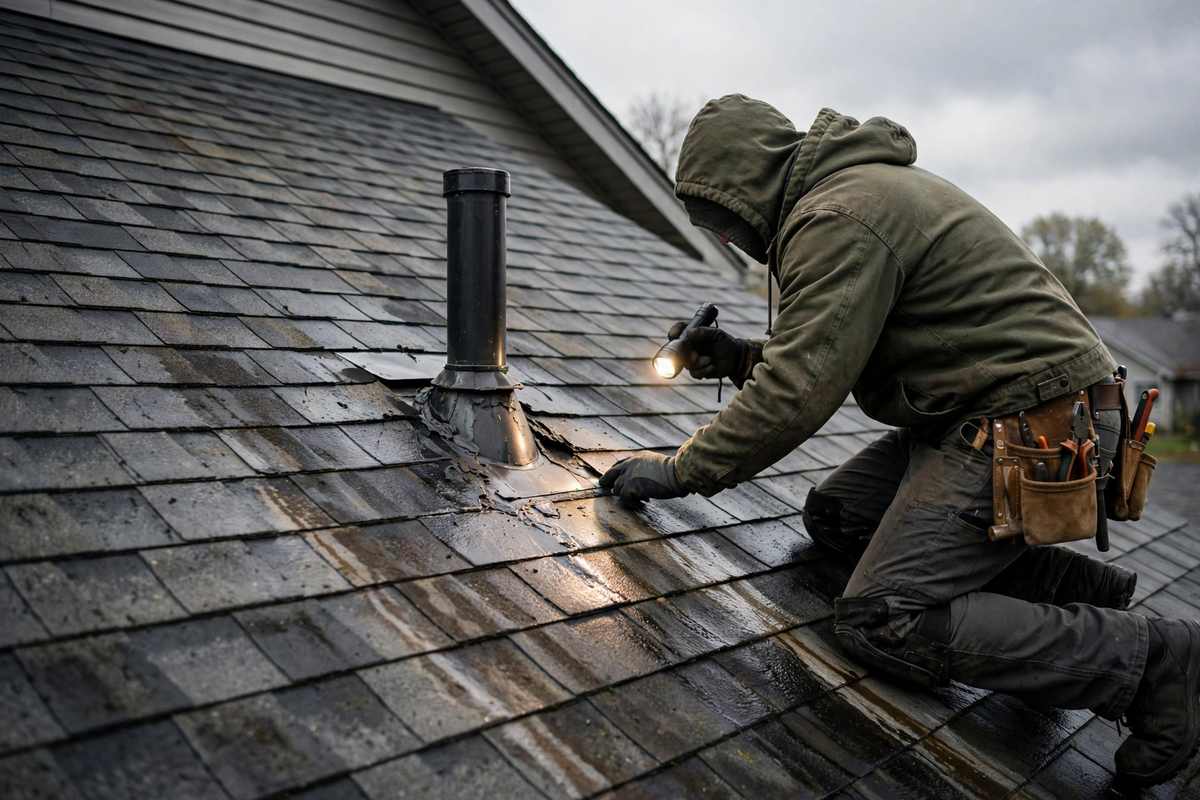
Roof repair in Des Moines, IA is the work of restoring a damaged roof to watertight condition without replacing the whole system. That means locating the failure, whether it is a cracked pipe boot, a lifted shingle course, or flashing that pulled away from a chimney, then correcting the cause and not just the symptom. Moisture meters and infrared cameras trace where water is actually entering, because the stain on a ceiling is rarely directly under the hole. Repairs range from a single shingle swap to re-decking a damaged section and re-flashing a valley.
Des Moines roofs take a specific beating. Summer hail, spring wind gusts that peel back three-tab shingles, and winter ice dams that force water under the ice and water shield all create the same call: water where it should not be. Older homes in Sherman Hill and Beaverdale may have layered shingles or aging flashing that fails before the shingles do. If the damage turns out to be widespread, a roof replacement may fit better, and the inspection will say so honestly.
Find the source first, repair to spec, and test the repair.
You should know exactly what happens from the first call to the final walk-around. Here is the typical sequence for a roof repair job.
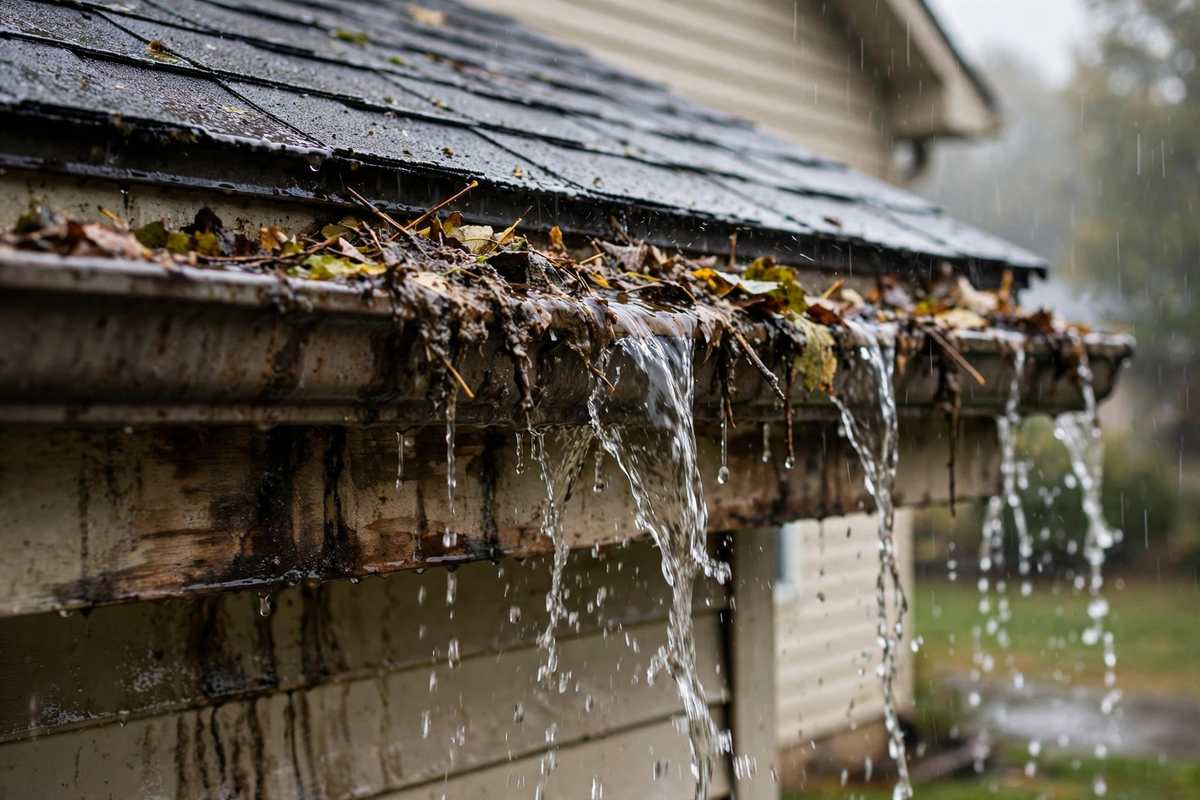
The call covers what is happening: the address, the roof type if known, and whether there are ceiling stains, missing shingles, or granules in the gutters. That conversation should set out what tools and materials the visit needs.

Ask whether the roof is walked with fall protection on, with the field shingles, valleys, flashing, pipe boots, and chimney checked and any soft spots probed. Ask whether a moisture meter is used on the deck and an infrared camera used when the leak is stubborn.
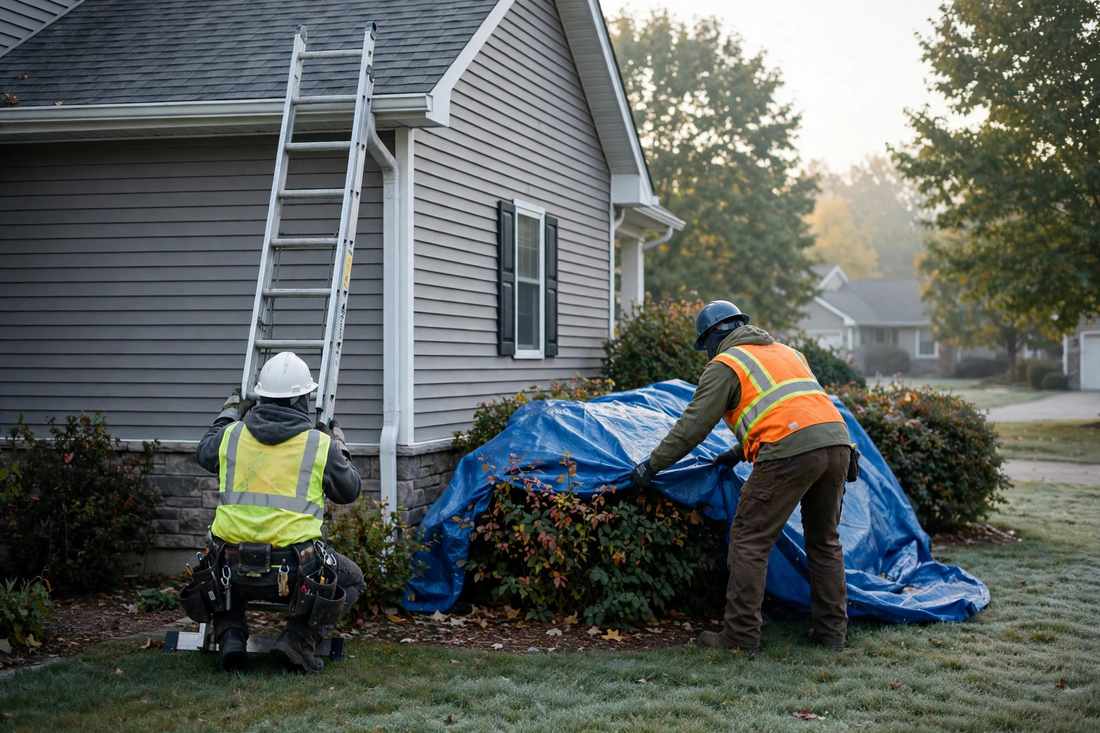
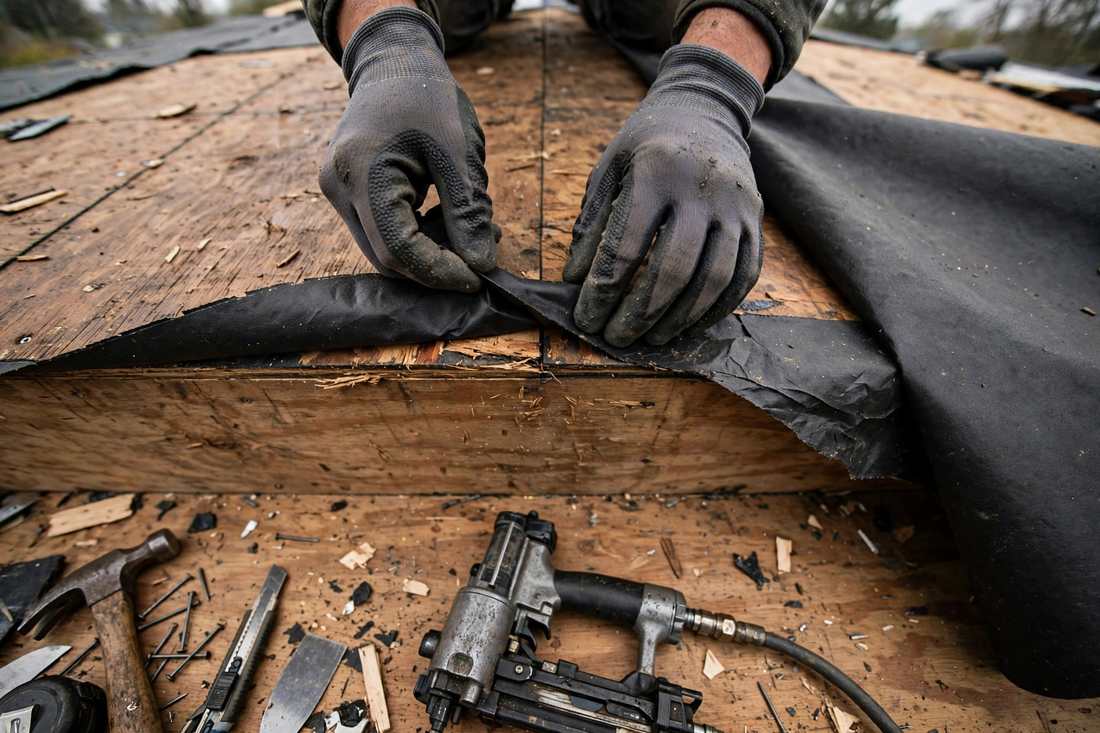
Ask for a clear scope: what failed, what will be replaced, what materials will be used, and the price, agreed before work starts. If damaged decking is found once the repair is opened, ask for photos and a price for the additional work before proceeding. Approval comes before continuing.
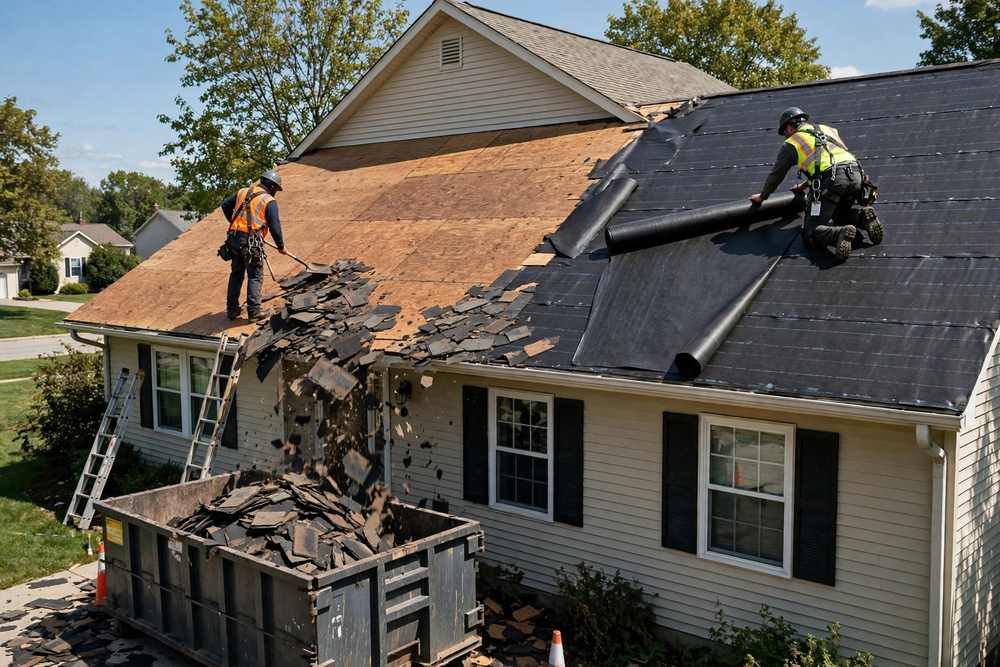
Ask about landscaping cover, removal of only the damaged shingles, flashing and underlayment replaced as needed, and new shingles nailed to match the existing course. Ask for the work area kept clean and the finished work walked through before leaving.
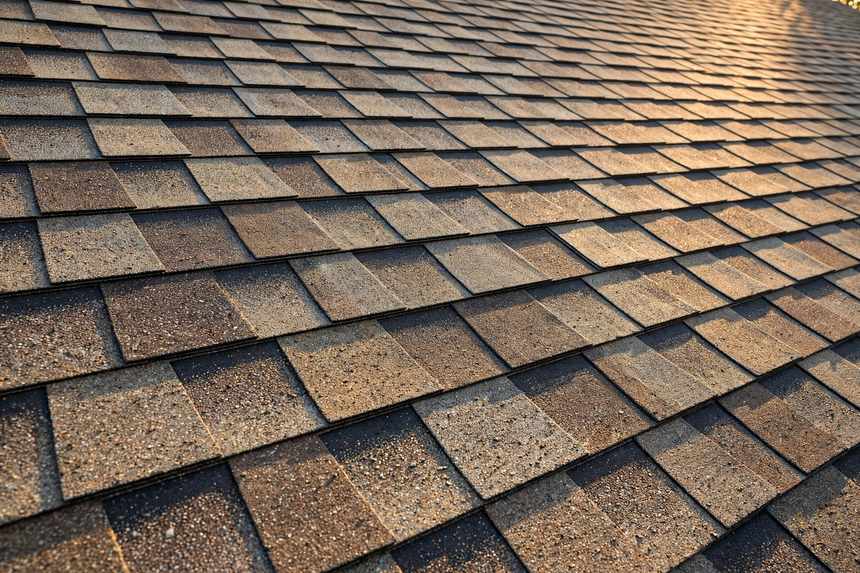
Ask for the repair area water-tested where possible and the attic side checked for any remaining moisture. Ask about a magnetic sweep for nails, a walkthrough of the finished work, photos of the repair, and a note on what to watch for next season.
Reads the moisture content of the deck and insulation, confirming where water is actually present instead of guessing from the stain.
Shows temperature differences that reveal wet zones behind drywall and under shingles, which is how slow leaks that do not show up on a visual inspection are found.
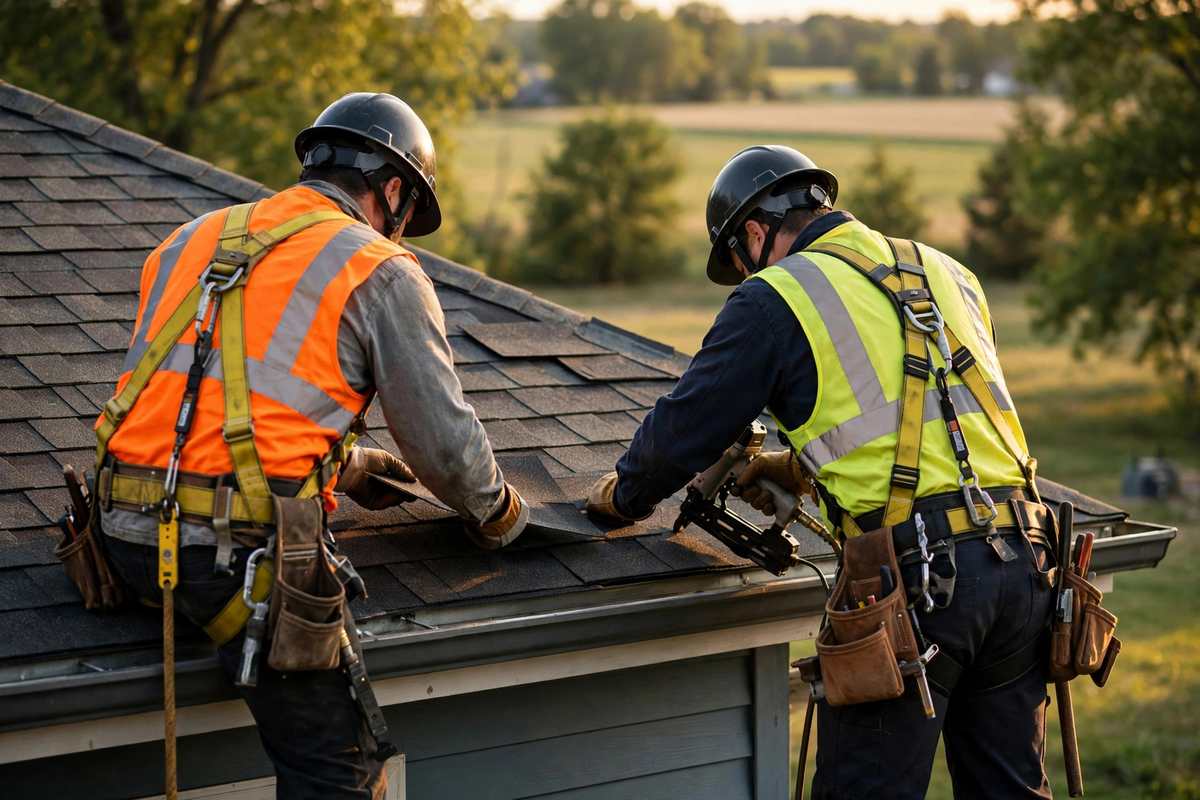
Drives nails to the system pattern and depth. Correct nailing is what keeps the repair from lifting in the next wind.
Removes damaged shingles cleanly and cuts replacements to fit, so the repair blends into the existing course instead of standing out.
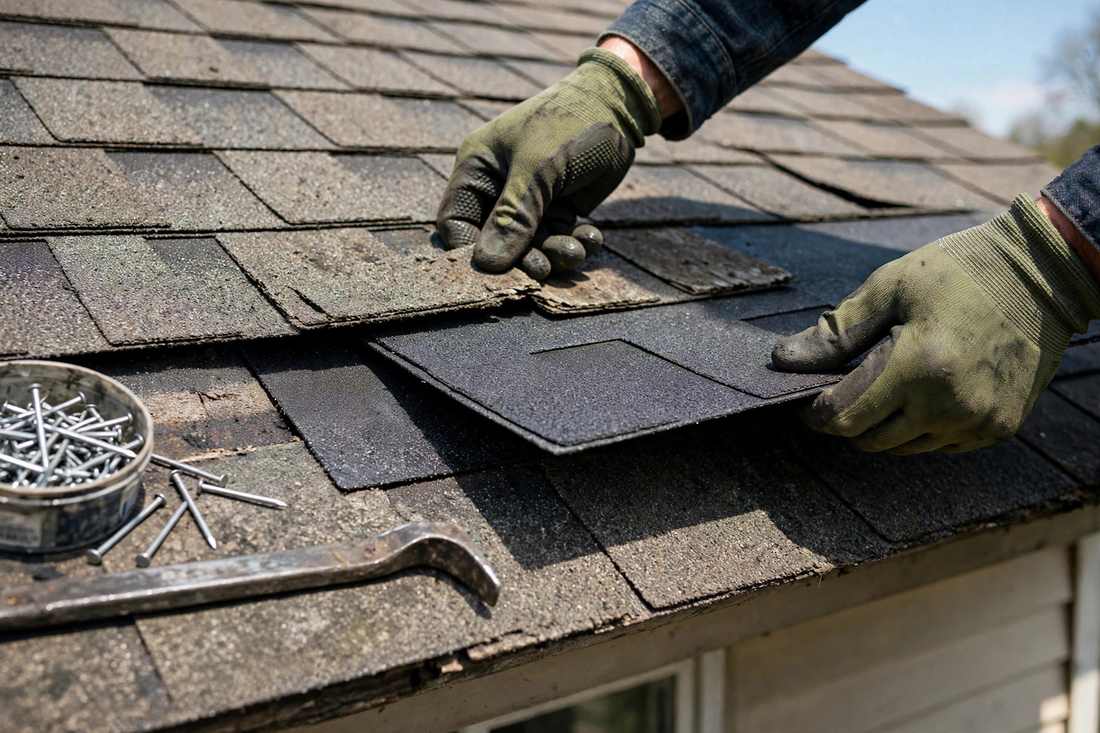
Marks straight courses and cuts flashing to fit chimneys, valleys, and skylights. Clean flashing cuts are what make a penetration watertight.
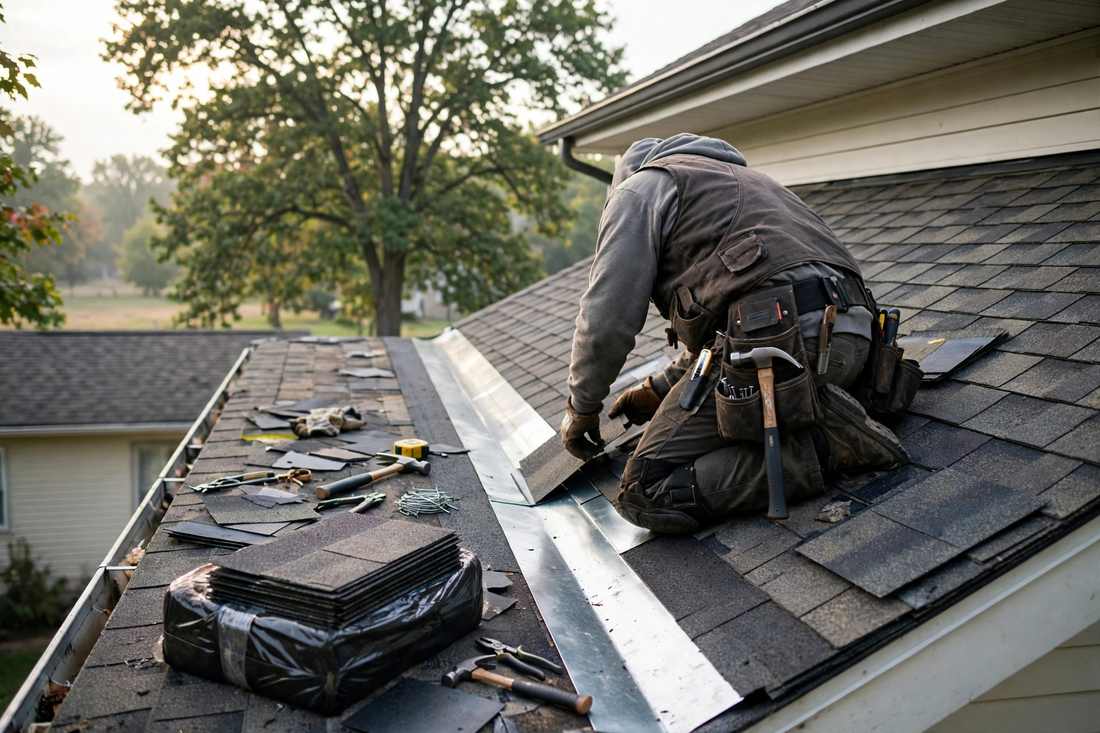
Keeps the crew safe on steep pitches and two-story roofs. Safe access means the inspection is thorough instead of rushed.
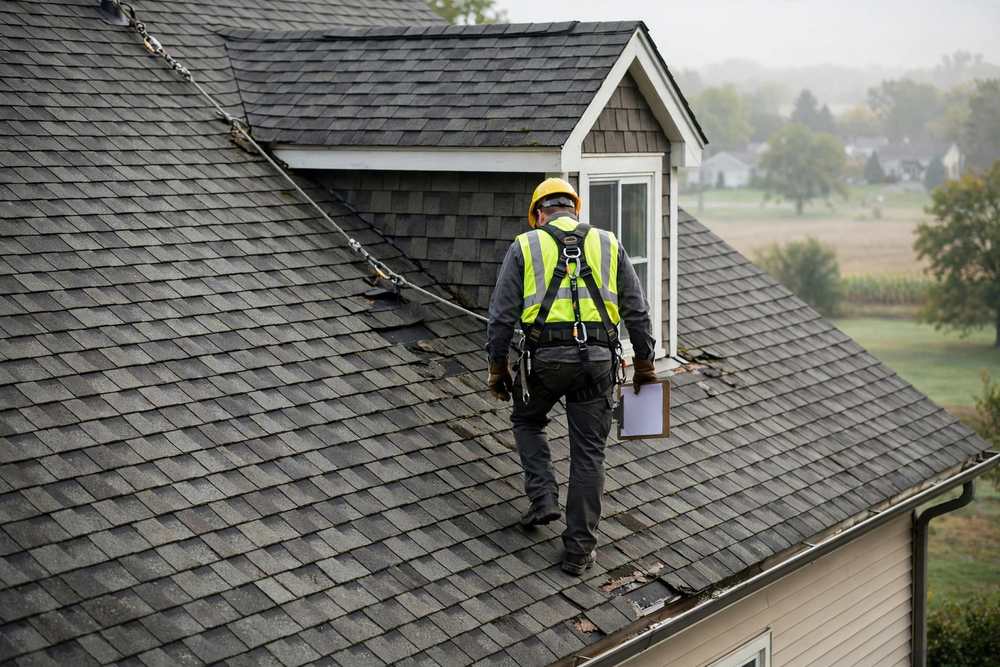
Shingles and flashing go in to the system specification, including nail pattern, overlap, and ice and water shield placement.
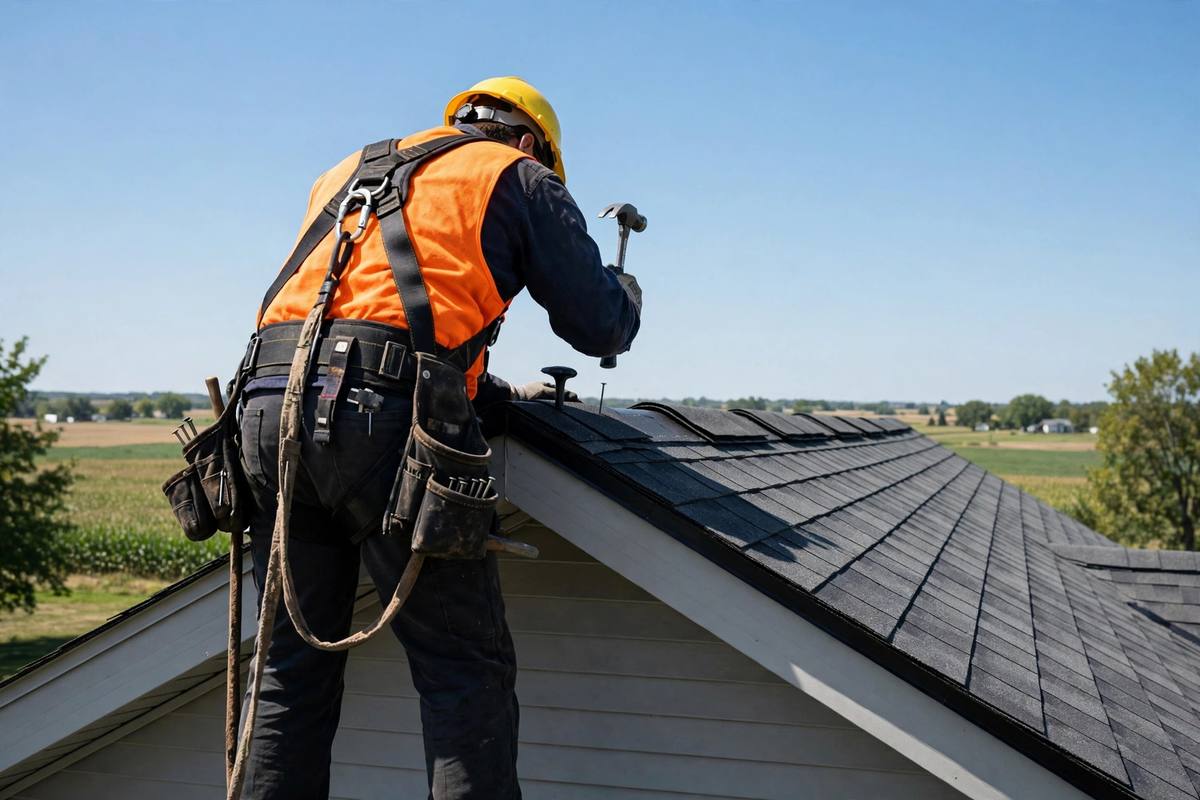
The leak is traced to its source with a moisture meter and infrared camera before a shingle is touched. Repairing the visible damage without finding the entry point is how leaks come back.
A brown ring on the ceiling after a heavy spring rain needs attention before it spreads. An inspection traces the leak with a moisture meter and usually finds a failed pipe boot or lifted flashing. The failed component is replaced, the surrounding shingles are checked, and the repair is water-tested.
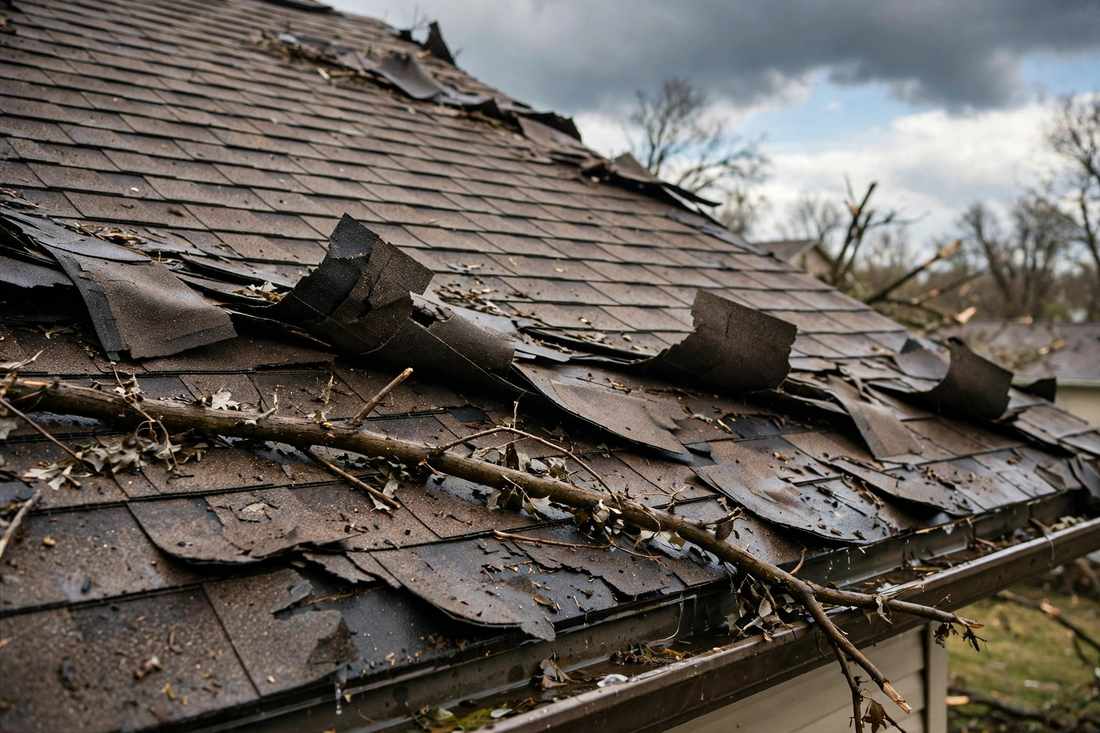
A hail storm knocks granules off the south-facing shingles and the homeowner is unsure what to do next. An inspection looks for hail bruising, and photos and a written scope document the damage and set out honestly whether repair or replacement fits. The repair is documented and matches the existing roof.
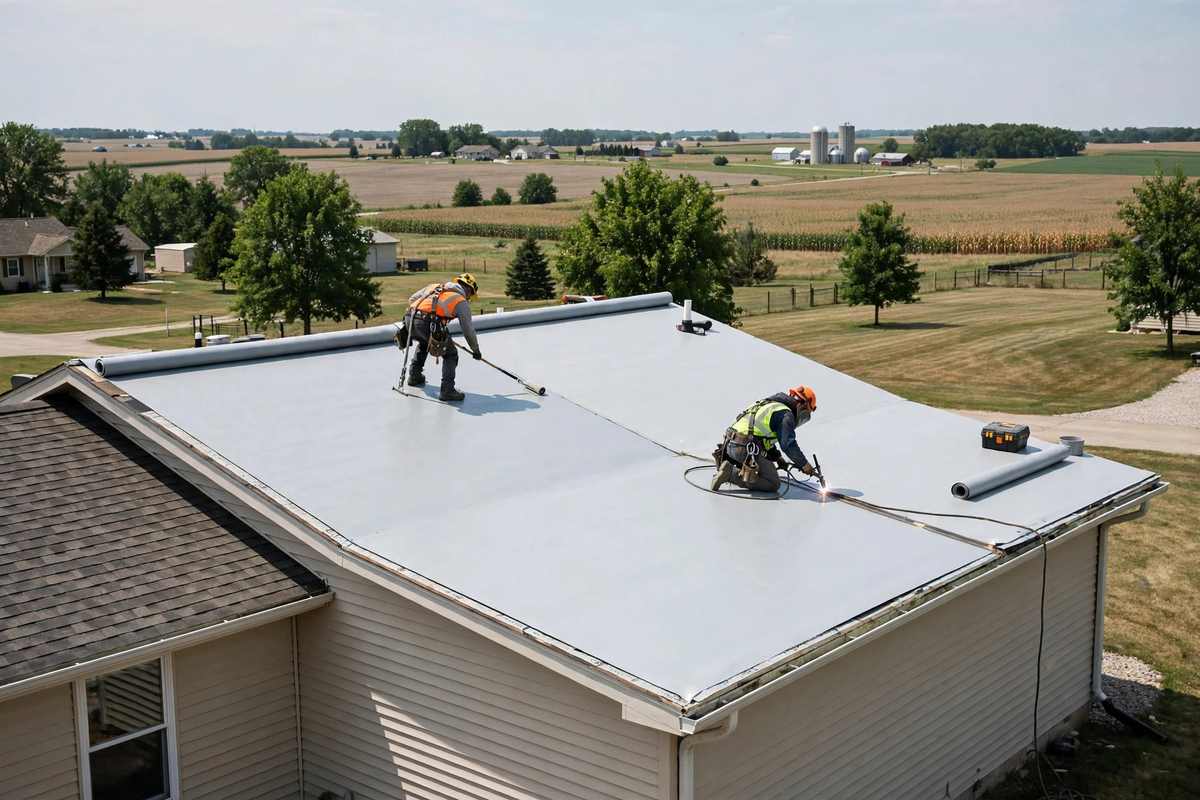
A flat porch roof leaks at a seam into the room below. The membrane is inspected, the failed seam is found, and it is repaired with matching membrane and flashing. The leak stops and the repair is documented for the building file.
An older home has layered shingles and a chimney that leaks every time it rains hard, and two previous patches have failed. The failed patch is stripped, the chimney flashing is rebuilt with proper step and counter-flashing, and the shingles around it are replaced. The deck is checked for damage while it is open.
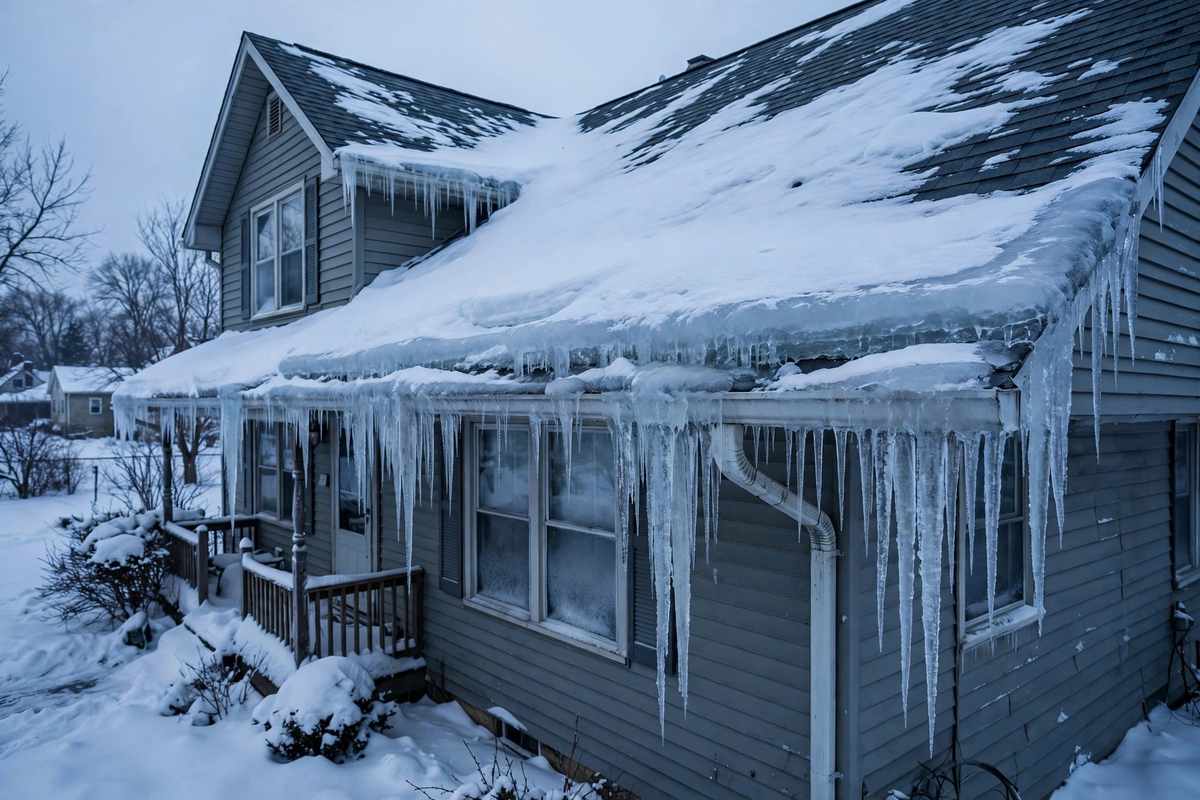
Des Moines roofs face a specific combination: summer hail, spring and fall wind, and winter freeze-thaw cycles that push water into every small gap. Ice dams form at the eaves when attic heat melts snow and the meltwater refreezes at the cold edge, forcing water under the shingles. Older neighborhoods may have layered shingles and aging flashing.
A homeowner has a brown ring on the ceiling that two previous patch jobs failed to stop. The stain keeps growing after every rain, and the drywall is soft to the touch.
A typical scope traces the leak to a cracked pipe boot uphill from the stain, replaces the boot and the surrounding shingles, and water-tests the repair. The source is fixed, not the stain.
Checking pipe boots and flashing each spring and after any hail event catches the next failure before it reaches the ceiling.
A spring hail storm bruises the south-facing shingles on a two-story home. The homeowner is unsure whether the damage is limited or widespread, and one contractor has pushed for a full replacement.
A typical scope documents the hail bruising with photos and a written scope and replaces the damaged courses with matching shingles where the damage is isolated. The written scope can be shared with the insurer.
A roof check after hail season is worth arranging, since hail seasons tend to repeat on the same slopes.
A low-slope porch roof leaks at a seam into the room below. The membrane is patched and blistered near the seam, and the wall tie-in flashing is failing.
A typical scope removes the failed section, repairs the seam with matching membrane, and rebuilds the wall flashing. Drainage is checked so water leaves the low slope instead of ponding on it.
A yearly low-slope roof check that looks at seams, drains, and ponding is where most flat-roof leaks get caught early.
Most repair calls are one of these problems. Each one has a window where a repair is straightforward and a point where it becomes a replacement.
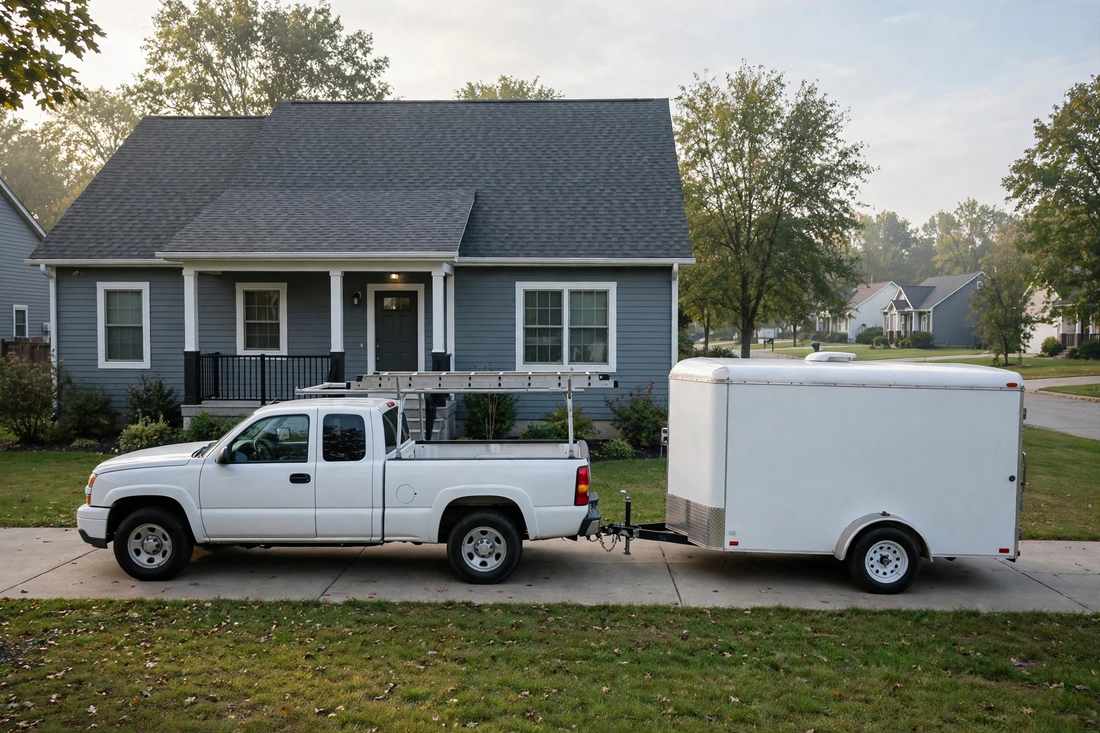
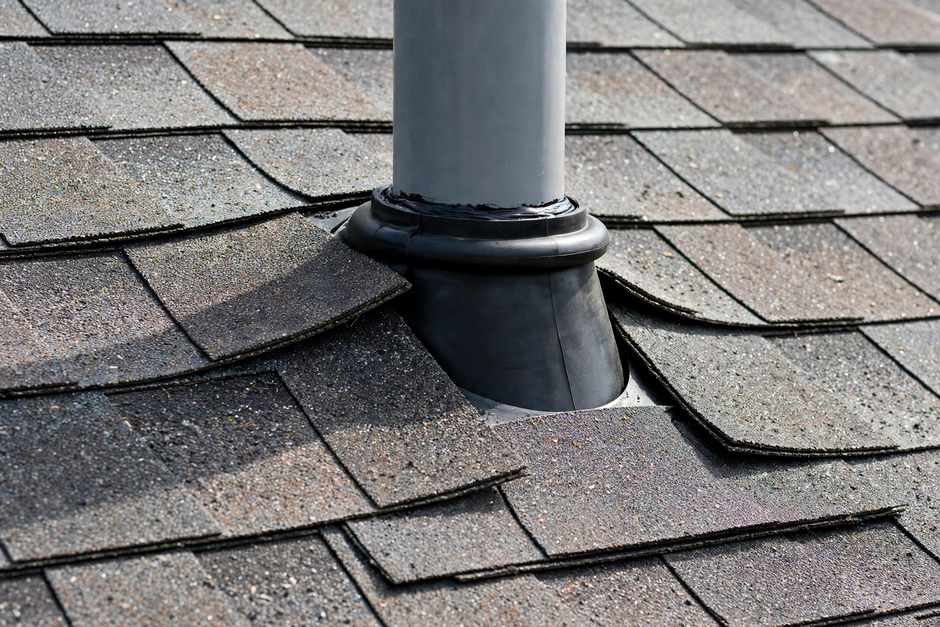
The leak is traced with a moisture meter and infrared camera to the actual entry point, then the flashing, boot, or shingle that failed is repaired. The stain stops because the water stops. A patch on the stain does nothing if the water is entering uphill.
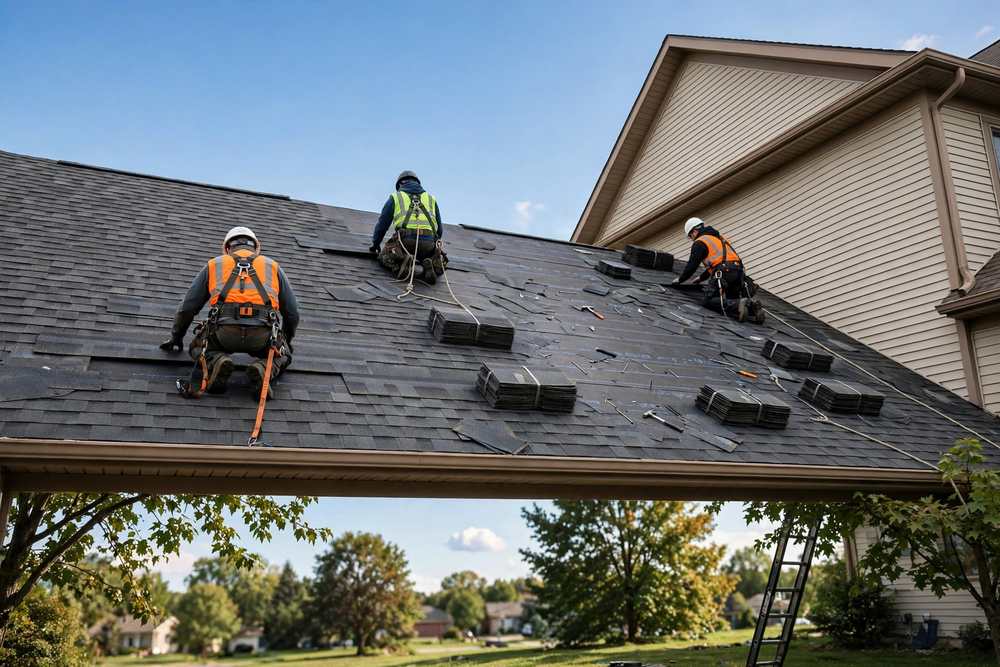
The missing shingles are replaced, lifted courses are resealed and re-nailed, and the profile and color are matched so the repair blends. The damage is documented with photos at the same time. One missing shingle exposes the underlayment, and the next rain drives water into the deck.
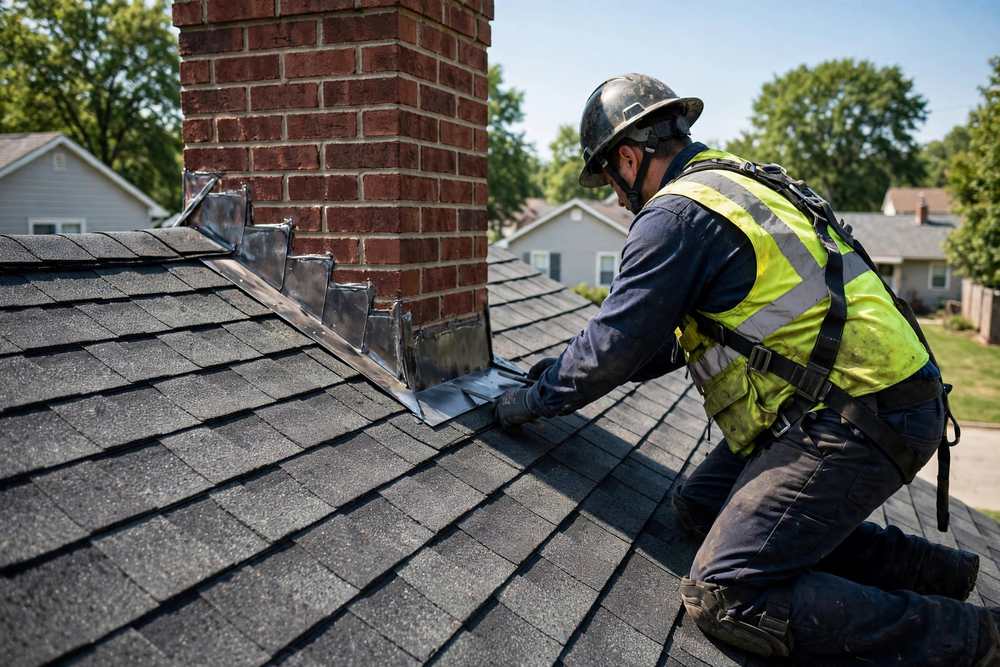
The water damage is repaired, then the cause is addressed: attic ventilation and eave flashing. That combination stops the ice dam from forming again next winter. Ice at the eave forces meltwater under the shingles and into the attic.

The flashing at the chimney or skylight is rebuilt with proper step and counter-flashing, the penetration is resealed, and the repair is water-tested. Chimney and skylight flashing failures are slow. Water enters at the flashing, travels along the deck, and shows up feet away.
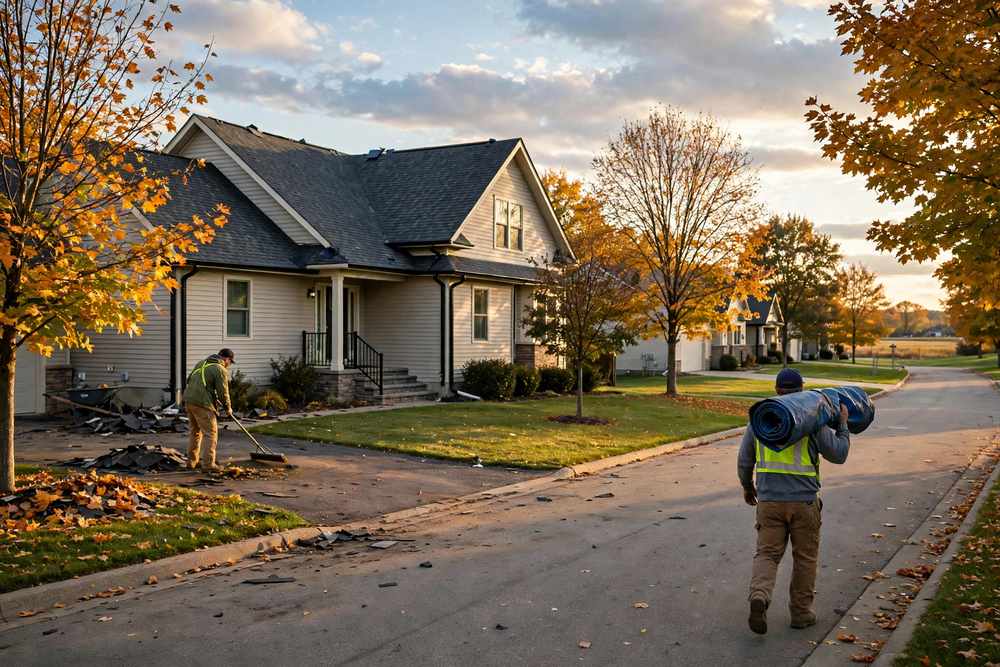
Any damaged fascia and soffit are repaired and the pitch is checked so water flows away from the roof edge instead of pooling there. Water that cannot drain backs up at the fascia, rots the wood, and works under the bottom shingle course.
A leak that reaches your ceiling has already traveled through insulation and decking. Catching it early keeps the repair to shingles and flashing instead of sheathing, drywall, and paint.
Wet plywood rots, and damaged decking cannot hold a nail. Once that happens, a shingle repair turns into a tear-off of the affected section. Probing the deck at every repair and replacing only what is soft keeps the job honest and the structure sound.
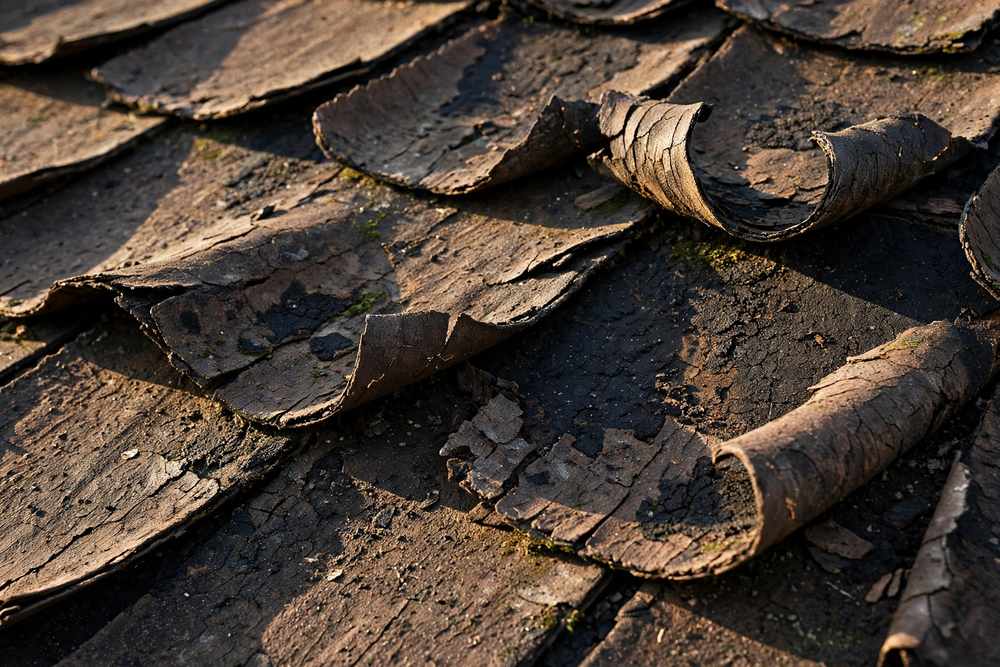
Wind damage rarely stops at one shingle. Once a course lifts, the next wind event takes more. Resealing and re-nailing lifted courses, and replacing bruised shingles that hail has knocked the granules off, stops the cycle before it starts again, because those bruised spots crack.
If a storm caused the damage, you need photos and a written scope for your records. Ask for photos of the damage, a note on the shingle profile and match, and a clear description of what failed and why. That documentation can be shared with your insurer.
Records worth asking for, to keep and share.
Ask for what failed, what is replaced, and the price
Ask for damage and finished repair, documented
Ask for the profile and color used, for future matching
A repair makes sense when the damage is isolated and the deck is sound. Replacement makes sense when damage is widespread or the deck is failing across large areas.
One or two failed areas with sound shingles around them are repair candidates. The repair should match the existing course.
Hail bruising or wind damage across multiple slopes usually means replacement costs less over time than repeated repairs.
Soft decking under a small repair is fixable. Damage across a large area means the roof is near the end of its life.
Questions about an address in Des Moines? Call (515) 385-2566 and ask.
The price depends on what failed, how much of the roof is involved, the pitch, the number of layers, and whether the deck is soft. A single shingle or flashing fix sits at the low end, and a section re-deck with new underlayment and shingles costs more. Ask for an inspection and a written scope with the price before work starts.
Find the entry point, not the stain. Water travels along the deck, so the leak is usually uphill from the ceiling spot. Pipe boots, chimney flashing, valleys, and lifted shingles are the usual suspects. If you cannot safely inspect the roof, call (515) 385-2566 and ask for the leak traced with a moisture meter and infrared camera.
Often, yes. When the damage is isolated and the shingles around it are sound, a repair that replaces the failed flashing, boot, or shingles and checks the deck underneath is the right scope. Widespread damage across whole slopes is a replacement conversation.
It depends on the scope. A single shingle or pipe boot is a short visit. A section re-deck with new flashing takes longer, and storm damage across multiple areas longer still. The written scope sets out the work so you can plan around it.
Call ZT Contracting LLC at (515) 385-2566 to arrange a repair visit, and ask for the leak traced, photos of what is found, and a written scope before any work starts.
Call (515) 385-2566, Monday through Saturday, 8 AM to 6 PM, to arrange a time to look at your roof. We are closed on Sundays.